
Spring’s Awakening and Summer’s Fire: Ritucharya for Vasanta and Grishma
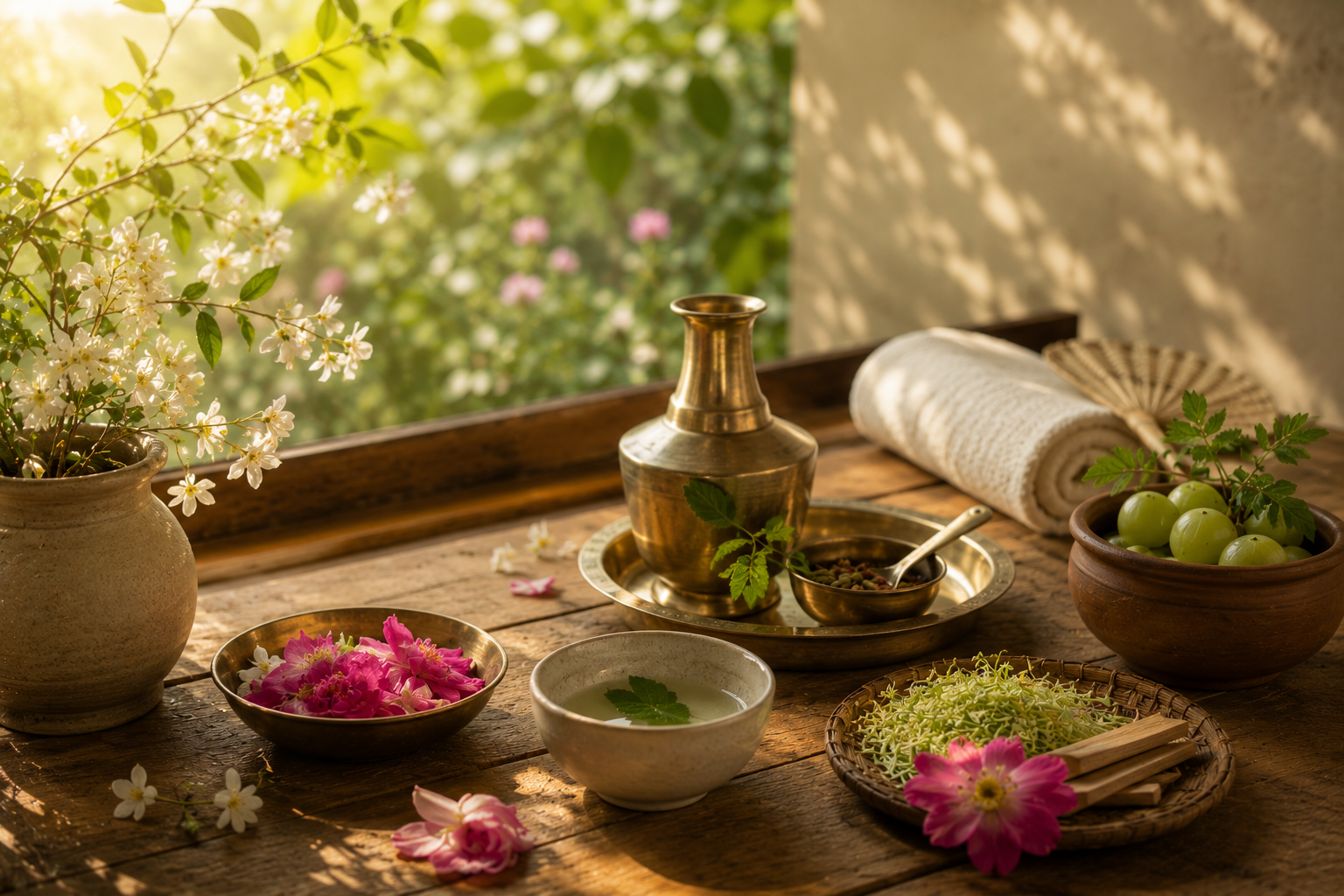
As winter’s stillness yields to lengthening days and the air grows fragrant with new blossoms, the body begins to shed accumulated heaviness. In Ayurveda, spring—Vasanta—is a time when Kapha, the dosha of stability and moisture, naturally increases.
If unaddressed, this can manifest as sluggish digestion, congestion, lethargy, or emotional dullness. Shortly thereafter comes summer—Grishma—when the sun’s intensity heightens Pitta’s qualities of heat, sharpness, and transformation.
Ritucharya offers a clear, compassionate framework for moving through these warmer months with lightness, clarity, and sustained energy, transforming potential discomfort into opportunities for renewal.
Rather than viewing these seasons as challenges to endure, classical Ayurvedic understanding sees them as natural phases for resetting and refreshing the system.
By consciously lightening the load on digestion, encouraging natural elimination, and protecting against excess heat, we support the body’s innate intelligence. The result is not merely comfort but a renewed sense of vitality that carries forward, allowing Prana to flow more freely and Ojas to build steadily as the year progresses.
Kapha in Spring: Lightening and Awakening the System
During Vasanta Ritu, the qualities of cold, heavy, and moist predominate, mirroring and aggravating Kapha’s inherent nature. To maintain balance, Ritucharya recommends cultivating opposite qualities: light, warm, dry, and stimulating.
Diet shifts toward bitter, astringent, and pungent tastes that help mobilise accumulated Kapha without depleting Agni. Fresh greens, sprouts, bitter gourd, turmeric, ginger, black pepper, and a moderate amount of raw honey, never heated, become supportive allies.
Heavy, sweet, cold, or excessively oily foods are gently reduced, allowing the digestive fire to strengthen after winter’s slower pace and preventing ama from forming.
Lifestyle follows this principle of lightness and stimulation. Rising earlier aligns with the lengthening daylight and helps counteract Kapha’s tendency toward inertia.
Engaging in more vigorous yet joyful movement—brisk walks through blooming landscapes, dynamic yoga sequences that open the chest and stimulate circulation, or even dancing—helps mobilise stagnant energy.
Dry brushing the skin before bathing or enjoying light herbal teas with warming spices further supports this natural cleansing process.
The emphasis remains on freshness and moderation: early, well-spaced meals, ample exposure to morning sunlight, and activities that inspire rather than exhaust.
When Kapha is balanced in spring, one often experiences clearer sinuses, lighter digestion, brighter mood, and a renewed sense of motivation.
Pitta in Summer: Cooling and Protecting Inner Fire
As Grishma Ritu arrives with its intense heat and long days, the focus turns to pacifying Pitta’s heat, sharpness, and tendency toward inflammation or irritability.
Bitter, sweet, and astringent tastes predominate, with cooling foods such as cucumber, coconut water, mint, coriander, fennel, sweet ripe fruits, and leafy greens taking centre stage.
Spices shift from strongly heating to aromatic and cooling—coriander, fennel, cardamom, and rose—while reducing chilli, ginger in excess, or fermented foods that could further intensify Pitta.
Meals are best taken at moderate temperatures, avoiding both very hot and very cold extremes that could disturb digestion or Agni.
Daily rhythm adjusts to the sun’s strength to protect both body and mind. Midday rest or lighter activity during peak heat hours prevents overheating and preserves mental clarity.
Evening walks under cooler skies, moon bathing when possible, and calming practices such as gentle sheetali or sitkari pranayama, meditation, or time in nature help dissipate accumulated heat.
Abhyanga uses lighter oils like coconut or none at all during intensely hot periods, preserving the skin’s natural cooling capacity while still nourishing tissues.
When Pitta remains balanced in summer, skin stays clear and comfortable, appetite remains steady without excess, sleep is restorative, and emotional responses remain even and compassionate rather than reactive.
Gentle Daily Applications Across Both Seasons
Small, consistent choices accumulate into profound support throughout Vasanta and Grishma.
Begin the day with warm water infused with a touch of honey and lemon in spring, transitioning to cooler mint or coriander infusions as summer deepens.
Favour early, lighter dinners so the body is not digesting heavily during warm nights when Agni naturally slows.
Choose breathable natural fabrics such as cotton or linen and allow skin to breathe freely.
When heat builds, a short period of quietude in a shaded space, a cooling foot bath with rose water, or simply resting the eyes restores equilibrium far more effectively than pushing through fatigue.
Observe how these adjustments affect energy, mood, digestion, and even skin clarity. Many notice steadier appetite, reduced bloating or acidity, calmer emotions, and improved sleep quality when following the season’s guidance rather than forcing year-round routines.
Additional supportive practices include avoiding midday sun exposure, choosing lighter exercise in the cooler parts of the day, and incorporating bitter herbs or spices mindfully to keep channels clear.
The key is gentle awareness: if digestion feels heavy after a meal, adjust the next one toward more lightness; if irritability arises with heat, prioritise cooling activities and foods.
A Thoughtful Conclusion
Spring and summer invite us to release what no longer serves and to protect what is tender within. Through Ritucharya, these warmer months become allies in renewal rather than periods of depletion.
By listening to the body’s changing needs and responding with opposite qualities—lightness in spring, coolness in summer—we move through the year with greater ease, clarity, and grace.
The principles of balancing Kapha and Pitta while supporting Agni and Prana offer a compassionate roadmap that honours both the external environment and our inner landscape.
We invite you to explore further articles on our platform for deeper insights into Ayurvedic wisdom and its gentle application in daily life.