
Sauna and Seasonal Wisdom: A Modern Practice Through the Ayurvedic Lens of Ritucharya
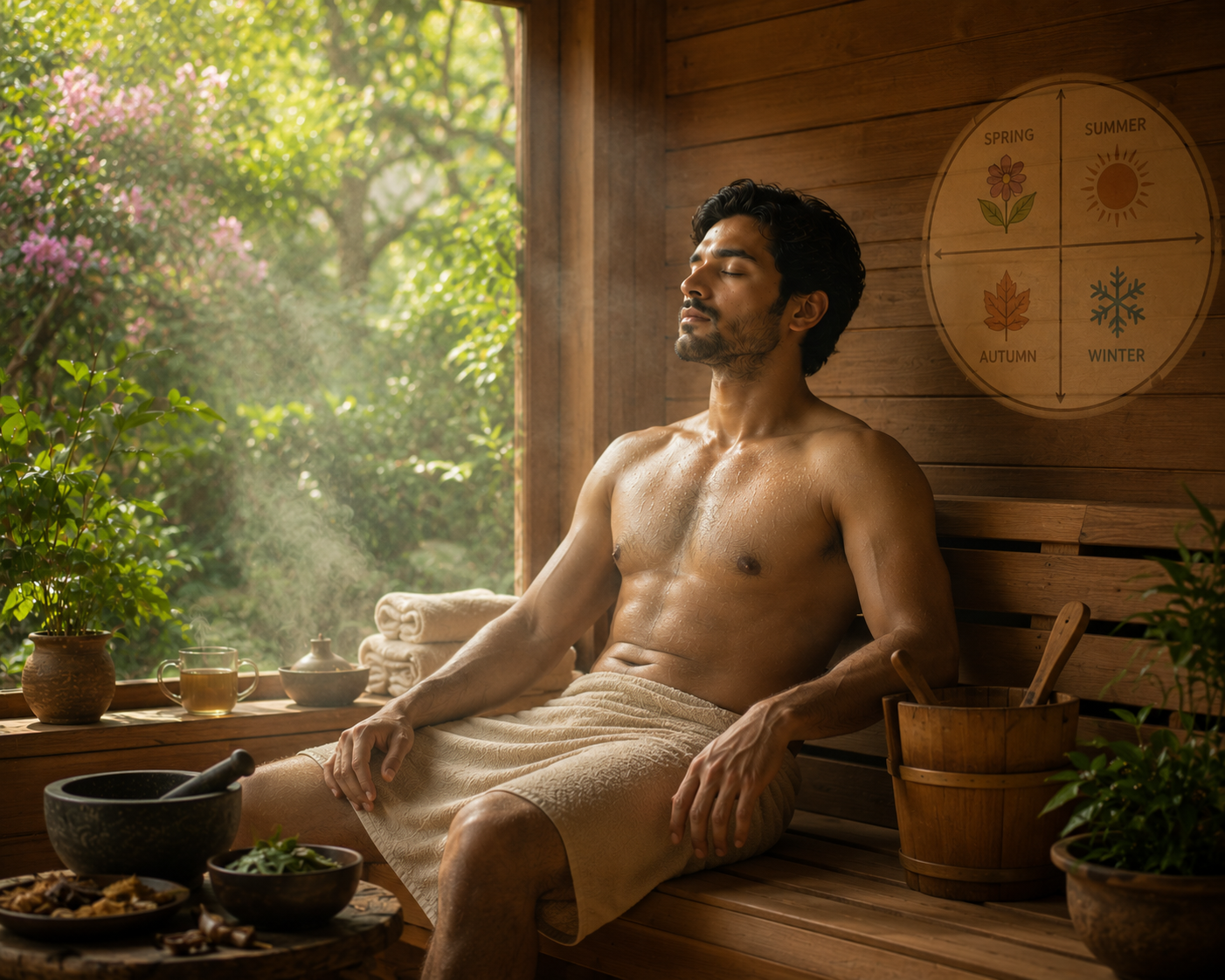
In contemporary wellness circles, many people explore sauna bathing as a way to support relaxation, circulation, and a sense of renewal after physical activity or daily stress.
While sauna is not a traditional Ayurvedic therapy and should never be confused with classical practices such as swedana, or therapeutic sudation, viewing it through the principles of Ritucharya offers an interesting perspective on how certain modern practices might be considered alongside seasonal living.
Ayurveda emphasises living in harmony with nature’s qualities; a thoughtful, individualised exploration of sauna can be approached with awareness of these timeless ideas, always secondary to classical recommendations and with full attention to personal constitution and the current season.
The potential connection arises not from direct equivalence but from shared themes of heat, elimination, circulation, and restoration.
Classical Ayurvedic understanding values the body’s natural capacity for sweating as part of maintaining balance and clearing what is no longer needed, and modern sauna use involves deliberate heat exposure that induces perspiration.
When approached mindfully and in alignment with seasonal needs, some individuals find it offers experiences that may complement their overall sense of well-being in ways that echo certain Ayurvedic intentions—without replacing time-tested seasonal routines or therapies.
Heat, Circulation, and the Subtle Movement of Prana
From an Ayurvedic perspective, balanced Prana depends on unobstructed channels, or srotas, and steady, even circulation throughout the body.
The warmth generated in a sauna session may be experienced by some as gently stimulating movement within the tissues and subtle pathways.
In colder months, when external cold can contract tissues and slow circulation, a moderate sauna experience might feel aligning with Ritucharya’s principle of introducing warmth to counter seasonal qualities of cold and dryness, potentially supporting Vata balance when used thoughtfully.
In warmer seasons, however, the same practice requires greater discernment. Pitta-aggravating heat already predominates in summer and parts of autumn; additional intense external heat may feel excessive or disruptive to Agni and overall equilibrium.
Ritucharya’s guidance to favour cooling, light, and bitter qualities in these months suggests approaching such practices with extra care, shorter durations, or choosing gentler alternatives during peak heat periods.
The key remains personal observation: how does the body and mind respond after the session? Does it support steady energy and clear Prana, or does it create temporary imbalance that requires additional cooling or grounding afterward?
Supporting Agni and Natural Elimination Processes
Ayurveda places great importance on strong yet balanced Agni for proper digestion, absorption, and the prevention of ama accumulation.
Some contemporary descriptions of sauna use note temporary increases in metabolic activity and sweating as a form of elimination.
Through an Ayurvedic lens, this could be seen as potentially complementary to the body’s own processes of clearing metabolic residues—provided it does not overwhelm digestion, deplete Ojas, or disturb doshic balance.
Ritucharya often recommends lighter or more stimulating foods and activities in seasons when Kapha accumulates, such as spring.
A sauna session, when followed by proper rehydration with warm or room-temperature fluids, rest, and nourishing meals suited to the season, might be explored by some as one possible element within a broader seasonal routine aimed at supporting lightness and movement.
Yet the emphasis stays firmly on moderation and individual response: Ayurveda consistently advises against extremes that could disturb Agni or deplete vitality.
Observing digestion, energy levels, and sleep quality the following day becomes essential when considering any such practice alongside classical Ritucharya.
Integrating with Seasonal Awareness and Personal Constitution
Thoughtful integration means letting the current ritu guide frequency, duration, and intensity.
In winter, during Hemanta and Shishira, when the body naturally seeks warmth and Vata or Kapha may benefit from gentle stimulation, a shorter, moderate session may feel more harmonious with Ritucharya’s call for grounding and nourishment.
In spring, when Kapha begins to mobilise, it might be approached cautiously as one possible supportive element among many for encouraging natural movement—always secondary to diet, abhyanga, and classical self-care.
In summer and monsoon, greater restraint is wise to avoid compounding existing heat or dampness.
Throughout, the Ayurvedic invitation remains the same: listen inwardly with honesty. Notice digestion, sleep quality, energy levels, emotional steadiness, and any signs of doshic imbalance.
If a practice supports these markers within the context of the season, it may serve as a contemporary companion; if it creates fatigue, irritability, or digestive disturbance, seasonal wisdom suggests setting it aside or adjusting it significantly.
Sauna, like any modern wellness approach, is best explored as an optional addition explored with awareness rather than a replacement for the profound guidance of Ritucharya.
A Thoughtful Conclusion
Ritucharya teaches that true harmony arises from respectful attunement to nature’s qualities rather than addition for its own sake.
While modern practices such as sauna may offer experiences some individuals find supportive when used mindfully, they are approached most wisely when filtered through the lens of individual constitution, prakriti and vikriti, the qualities of the current season, and classical Ayurvedic priorities of balanced Agni, clear Prana, and preserved Ojas.
In this way, ancient principles continue to illuminate contemporary choices, guiding us toward balance that feels both timeless and personally relevant without ever replacing the foundational wisdom of seasonal living.
We invite you to explore further articles on our platform for deeper insights into Ayurvedic wisdom and its gentle application in daily life.