
Heat as Ally: Exploring Contemporary Sauna Practices Through the Wisdom of Ayurvedic Dinacharya
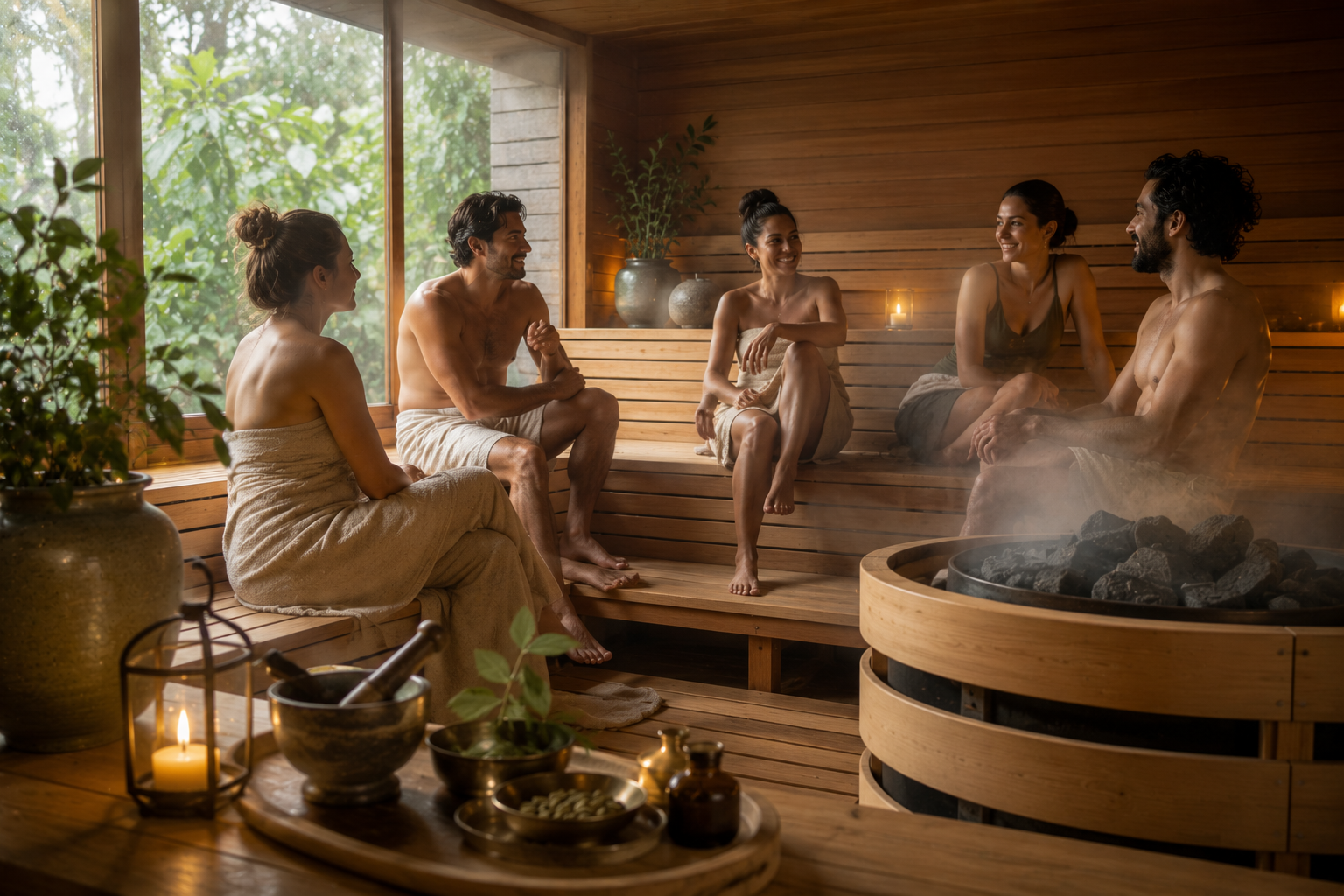
While the classical framework of Dinacharya provides complete daily rhythms rooted in nature’s intelligence, contemporary life sometimes invites additional explorations of well-being.
Among these, the sauna—whether traditional Finnish-style dry heat or modern infrared—has become a popular wellness practice that some individuals choose to integrate mindfully alongside Ayurvedic principles.
This article examines sauna use through an Ayurvedic lens, framing it as a contemporary complement rather than a traditional Ayurvedic therapy, and explores its possible resonances with concepts of Agni, prana circulation, detoxification support, and deep relaxation.
Ayurveda has long valued controlled application of heat through svedana, or sudation therapies, which dilate channels, promote circulation, and assist in clearing ama when used therapeutically within structured Panchakarma programs.
A modern sauna, however, represents a distinct cultural development and accessible self-care tool.
When approached with discernment and awareness of one’s unique constitution, it may offer supportive effects that echo certain purifying and restorative qualities valued in classical understanding, always positioned as an optional addition rather than a replacement for daily Dinacharya practices.
Potential Connections to Agni and Gentle Detoxification Support
Sweating induced by sauna heat can encourage the release of metabolic waste through the skin, paralleling the body’s natural mechanisms for clearing stagnation.
In Ayurvedic terms, this may gently support Agni by reducing accumulated heaviness or ama that can impede digestive fire, particularly for individuals with Kapha tendencies toward congestion or sluggish metabolism.
The experience of warmth followed by a sense of internal lightness after the session may complement the clearing effects already cultivated through morning tongue scraping, oil pulling, and regular movement within Dinacharya.
Improved circulation during heat exposure can enhance the movement of prana through the subtle channels by dilating blood vessels and encouraging flow.
This aligns conceptually with Dinacharya’s emphasis on maintaining unobstructed pathways through daily cleansing and moderate exercise.
Yet the sauna remains a contemporary practice—providing a concentrated period of external heat rather than the integrated, dosha-specific, and often herbal-enhanced sudation methods described in classical texts.
Relaxation, Rejuvenation, and Thoughtful Dosha Considerations
Deep relaxation frequently follows sauna use as the body shifts from activation to restorative states.
This calming effect can quiet an overactive mind, offering potential benefit for Vata restlessness or Pitta intensity when sessions are kept moderate in duration and temperature.
The subsequent sense of rejuvenation—eased muscle tension, clearer skin, and renewed energy—may complement the nourishing effects of Abhyanga or evening wind-down rituals already present in a well-established Dinacharya.
Balance and individual constitution remain essential. Pitta types, already possessing strong internal heat, may find prolonged or high-temperature sessions aggravating and should approach with caution, perhaps limiting frequency or temperature and always following with cooling measures.
Vata individuals might appreciate the penetrating warmth yet require careful rehydration with warm fluids and generous oil application afterward to prevent further dryness.
Kapha types often respond favorably, as the heat can counter heaviness and promote invigoration when thoughtfully combined with their stimulating morning and movement practices.
Practical integration within daily rhythms might involve occasional sauna sessions in the late afternoon or early evening—after gentle exercise or a shortened Abhyanga—followed by a cooling shower, light meal, and adherence to the usual early bedtime.
Hydration with warm herbal infusions and attentive self-observation of personal response remain central to safe and beneficial exploration.
Mindful Exploration as a Complement, Never a Substitute
Contemporary sauna use is best approached as an optional adjunct explored with respect for individual constitution and the foundational stability provided by consistent Dinacharya.
It does not replace the daily rituals of early rising, thorough cleansing, self-massage, mindful eating at appropriate times, or early restorative sleep.
These core practices offer gentle, continuous alignment with natural cycles that no concentrated heat session can replicate.
When considered, sauna simply illustrates how modern tools can be viewed through the clarifying perspective of ancient principles—always secondary to the timeless invitation to live in harmony with prana, Agni, and the doshas.
Regular self-observation—tracking energy, digestion, sleep quality, skin condition, and emotional tone before and after any such practice—reveals personal suitability far more reliably than generalized expectations.
Ayurveda encourages this discerning, embodied inquiry as the true path to wisdom.
Returning to the Core Wisdom of Daily Harmony
Ultimately, the deepest and most reliable support for well-being arises from the steady cadence of Dinacharya itself.
Whether or not one chooses to explore contemporary heat therapies, the daily commitment to rising with intention, cleansing with care, moving with awareness, nourishing the body appropriately, and resting in rhythm builds resilience, clarity, and vitality that accumulate over a lifetime.
Sauna, when thoughtfully considered through an Ayurvedic lens, serves merely as an illustration of how new practices can be integrated with respect for timeless principles—always returning the focus to the elegant simplicity of living in daily alignment with nature’s intelligence.
As you reflect on these connections between ancient rhythms and contemporary explorations, consider further immersion in Ayurvedic wisdom available on this platform to support your personal journey of balance and renewal.