
What Makes Ayurvedic Herbs Different from Modern Herbal Supplements?
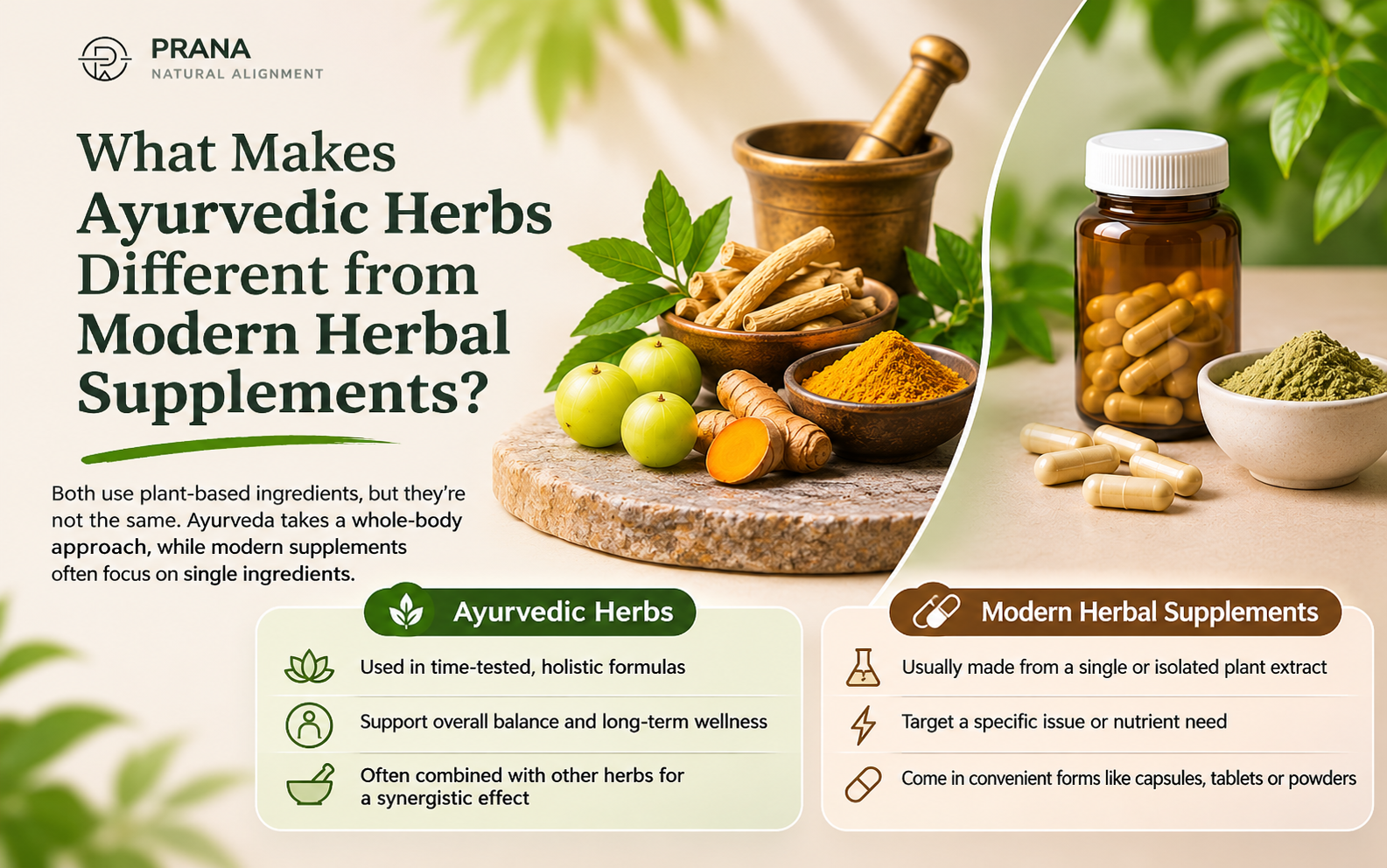
Natural wellness has become an important part of modern lifestyles as more people explore plant-based ingredients, traditional remedies, and herbal supplements. From turmeric and ashwagandha to tulsi and amla, herbs have been used across different cultures to support everyday health and well-being.
Among these traditions, Ayurveda holds a unique position. Originating in India thousands of years ago, Ayurveda offers a holistic approach to wellness that considers the relationship between the mind, body, daily habits, nutrition, and natural surroundings.
However, Ayurvedic herbs and modern herbal supplements are not exactly the same. Although both may use plant-based ingredients, they can differ in their philosophy, preparation methods, formulation approaches, and intended uses.
Understanding these differences can help people make informed decisions when exploring natural healing and wellness practices.
In this guide, we will explain what makes Ayurvedic herbs different from modern herbal supplements, explore commonly used Ayurvedic plants, and discuss how beginners can approach traditional wellness practices.
What Are Ayurvedic Herbs?
Ayurvedic herbs are plants and botanical ingredients traditionally used within Ayurveda, India’s ancient system of health and wellness. They are selected and understood through traditional Ayurvedic principles that consider individual constitution, digestion, lifestyle, seasonal changes, and overall balance.
Unlike approaches that focus exclusively on individual ingredients, Ayurveda considers how different aspects of daily living work together.
For example, ashwagandha, turmeric, tulsi, and amla have important places in traditional Ayurvedic practices. Each herb has its own traditional properties, uses, and preparation methods.
Ayurvedic formulations may contain one herb or a combination of several botanical ingredients. Their preparation can involve powders, teas, decoctions, pastes, oils, and other traditional forms.
The purpose is to incorporate traditional herbal knowledge into a broader approach to well-being rather than treating every herb as an isolated solution.
What Are Modern Herbal Supplements?
Modern herbal supplements are products made using plant-based ingredients that are processed into convenient forms such as capsules, tablets, powders, gummies, and liquid extracts.
These products are commonly developed around particular ingredients or their measurable chemical constituents.
For example, a modern supplement may contain a concentrated turmeric extract standardized to curcumin, while another may contain ashwagandha root extract with a specified concentration of certain compounds.
Modern supplement manufacturers may use laboratory testing, extraction technologies, and standardized manufacturing procedures to maintain consistency between batches.
These products are often designed for convenience and clearly defined ingredient quantities.
However, herbal supplements vary considerably between manufacturers. Their quality, formulation, testing, and evidence supporting specific uses should always be evaluated individually.
7 Key Differences Between Ayurvedic Herbs and Modern Herbal Supplements
Understanding the differences between these approaches requires looking beyond their ingredients.
1. Traditional Philosophy vs Ingredient-Based Formulation
One of the biggest differences is the philosophy behind each approach.
Ayurveda views wellness through the relationship between three doshas: Vata, Pitta, and Kapha. These principles describe different functional patterns within traditional Ayurvedic thinking.
The approach considers individual constitution, digestion, daily routines, food choices, and environmental influences.
Modern herbal supplements generally focus more directly on individual ingredients and their chemical composition.
For example, a turmeric supplement may be developed around its curcumin content, while Ayurveda considers turmeric within a broader traditional framework involving diet, preparation, and individual needs.
This does not mean one approach is automatically more effective. They simply represent different ways of understanding and using botanical ingredients.
2. Individualized Wellness vs General Supplement Formulations
Ayurveda traditionally emphasizes individual differences when discussing herbal preparations.
Factors such as Prakriti (individual constitution), digestion, age, lifestyle, and seasonal conditions may influence how an Ayurvedic practitioner approaches herbal recommendations.
Modern herbal supplements are often formulated for broader consumer groups.
A manufacturer might produce one ashwagandha capsule with a fixed ingredient quantity for general adult use.
In contrast, an Ayurvedic practitioner may consider several personal factors before recommending a particular preparation.
For beginners exploring Ayurveda, understanding these principles provides a useful starting point for learning about personalized wellness.
3. Different Preparation Methods
Preparation methods are another important distinction.
Traditional Ayurvedic practices use different methods depending on the herb and intended preparation.
Common examples include:
- Churna: Finely powdered herbal ingredients.
- Kwatha: A traditional herbal decoction prepared by boiling selected ingredients in water.
- Phanta: An infusion prepared by steeping herbs in hot water.
- Vati: Tablets or pills prepared using traditional formulation methods.
- Taila: Medicated oils prepared with selected herbal ingredients.
Modern herbal supplements often use extraction processes to concentrate specific botanical compounds.
These extracts may be converted into capsules, tablets, or liquid formulations.
Both approaches involve processing, but their methods and formulation objectives can differ considerably.
4. Whole-Herb Preparations vs Concentrated Extracts
Traditional Ayurvedic formulations may use whole herbs or different parts of plants, including roots, leaves, flowers, seeds, and bark.
Some modern supplements instead use concentrated extracts designed to contain measurable amounts of selected compounds.
Consider ashwagandha as an example.
An Ayurvedic preparation may use ashwagandha root powder, while a modern herbal supplement may contain a concentrated root extract standardized to a particular withanolide percentage.
These preparations are not necessarily interchangeable.
The concentration, plant part, extraction method, and other ingredients can influence the final product’s composition.
Neither whole-herb preparations nor concentrated extracts should automatically be considered superior. Their quality and suitability depend on the formulation and available evidence.
5. A Broader Approach to Daily Wellness
Ayurveda does not consider herbs the only part of maintaining well-being.
It also emphasizes daily routines, mindful eating, sleep, physical activity, breathing practices, and awareness of seasonal changes.
For example, Dinacharya refers to traditional daily routines intended to encourage consistency and balance.
Modern herbal supplements are generally consumed as part of an individual’s existing lifestyle.
Someone might take a botanical capsule while continuing their regular diet and exercise routine.
Ayurveda, on the other hand, encourages a broader perspective in which herbal preparations are considered alongside other lifestyle practices.
This holistic philosophy is one of the most recognizable characteristics of traditional Ayurvedic wellness.
6. Different Approaches to Quality and Standardization
Quality is important for both Ayurvedic preparations and modern herbal supplements.
Modern manufacturers may use standardized extracts, ingredient identification, microbial testing, and laboratory analysis to maintain product consistency.
Ayurvedic medicines manufactured in India are also subject to applicable regulatory requirements, including manufacturing standards and quality specifications under the Drugs and Cosmetics framework.
However, the level of testing and quality assurance can vary between individual products and manufacturers.
When evaluating an Ayurvedic health product, look for:
- Clearly identified botanical ingredients.
- Scientific or botanical names where available.
- Plant parts used in the formulation.
- Manufacturing and batch information.
- Appropriate quality and purity testing.
- Relevant certifications and regulatory details.
Consumers should also be aware that some poorly manufactured traditional preparations have been associated with harmful levels of heavy metals. Responsible sourcing and independent quality testing are important.
7. Different Roles in Modern Wellness
Ayurvedic herbs are traditionally understood within a complete wellness system that includes food, lifestyle, seasonal routines, and individual constitution.
Modern herbal supplements are often marketed as convenient additions to everyday nutritional routines.
Both approaches have become part of the growing interest in natural wellness.
For example, someone interested in natural healing may explore traditional Ayurvedic practices, while another person may prefer a standardized botanical extract with clearly stated ingredient quantities.
The important consideration is understanding what a product contains, how it is manufactured, what evidence supports its intended use, and whether it is appropriate for individual circumstances.
5 Best Ayurvedic Herbs to Know About
For people interested in Ayurveda for beginners, learning about commonly discussed herbs is a practical way to understand traditional botanical knowledge.
Here are five well-known examples.
1. Ashwagandha
Ashwagandha (Withania somnifera) is one of the most recognized Ayurvedic herbs.
Its roots have traditionally been used in Ayurvedic preparations associated with vitality, resilience, and general well-being.
Modern research has explored its potential relationship with stress and sleep, although findings are still developing and product formulations vary.
2. Turmeric
Turmeric (Curcuma longa) is a familiar ingredient in Indian cooking and traditional Ayurvedic practices.
It contains curcuminoids, including curcumin, which have been investigated for their biological activities.
Turmeric is used in food and various herbal preparations. Its traditional uses and potential modern applications should be understood separately from claims that it treats specific diseases.
3. Tulsi
Tulsi (Ocimum tenuiflorum), also known as holy basil, has an important place in Indian traditional wellness practices.
Its leaves are commonly used in herbal teas and traditional preparations.
Tulsi is traditionally associated with respiratory wellness and general vitality, although more high-quality human research is needed to establish specific health effects.
4. Amla
Amla (Phyllanthus emblica), also called Indian gooseberry, is valued in Ayurveda and Indian food traditions.
It contains vitamin C and various naturally occurring plant compounds.
Amla is commonly consumed in food, powders, and other botanical preparations.
5. Brahmi
Brahmi is a name commonly associated with Bacopa monnieri in Ayurvedic discussions.
It has traditionally been used in preparations associated with memory, learning, and mental clarity.
Some modern research has examined bacopa extracts and cognitive performance, but evidence varies depending on the formulation and study.
How to Choose a Quality Ayurvedic Health Product
Understanding the difference between traditional herbs and modern supplements is only the first step. Product quality should also be a priority.
Before purchasing an ayurvedic health product, consider the following factors.
Check the ingredient list: Make sure the product clearly identifies the herbs and botanical ingredients used.
Understand the preparation: Check whether the product contains whole-herb powder, an extract, or a combination of ingredients.
Review manufacturing information: Look for the manufacturer’s details, batch number, expiry date, and relevant manufacturing or licensing information.
Look for quality testing: Reliable manufacturers should be able to explain their quality-control practices and testing procedures.
Avoid unsupported claims: Be cautious of products promising instant results or claiming to cure multiple diseases.
Consider professional guidance: Herbal products can interact with medications and may not be suitable for everyone. Consult a qualified healthcare professional before introducing them into your routine, particularly during pregnancy, breastfeeding, or when managing an existing medical condition.
How Ayurveda Fits Into a Modern Lifestyle
You do not necessarily need to change your entire lifestyle to start learning about Ayurveda.
Small, consistent practices can introduce traditional wellness principles into everyday routines.
For example, maintaining regular meal times, prioritizing adequate sleep, practising mindful breathing, and developing a consistent morning routine can help create a more balanced lifestyle.
Yoga and breathing exercises are also commonly discussed alongside Ayurvedic wellness.
People exploring yoga for anxiety may find gentle movement, meditation, and guided breathing useful as complementary relaxation practices.
Similarly, understanding the benefits of pranayama can introduce beginners to the relationship between breathing, attention, and relaxation.
Pranayama includes traditional breathing techniques such as:
- Nadi Shodhana: Alternate-nostril breathing.
- Bhramari: Humming-bee breathing.
- Dirgha Pranayama: Three-part breathing.
- Ujjayi: A controlled breathing technique often practised during yoga.
These practices should be approached gradually and comfortably. They are not substitutes for appropriate medical or mental healthcare.
For beginners, combining simple lifestyle habits with a better understanding of traditional Ayurvedic principles can provide a practical introduction to holistic wellness.
Conclusion
Ayurvedic herbs and modern herbal supplements share an interest in the potential of plant-based ingredients, but their philosophies and preparation methods can be quite different.
Ayurveda offers a traditional approach that considers individual constitution, daily routines, food, breathing, and lifestyle alongside herbal preparations. Modern supplements often focus on specific ingredients, measurable botanical compounds, and convenient dosage forms.
Understanding these differences makes it easier to explore the best Ayurvedic herbs, evaluate product quality, and make informed decisions about natural wellness.
At PRANA Natural Alignment, the philosophy of Ayurveda is approached through the connection between breath, balance, mindful living, and traditional wisdom. Whether you are beginning your journey with Ayurveda for beginners or exploring the relationship between yoga, pranayama, and natural healing, learning the foundations can help you develop a more thoughtful approach to everyday well-being.
Frequently Asked Questions
1. Are Ayurvedic herbs better than modern herbal supplements?
Neither is automatically better. Ayurvedic herbs are traditionally understood within a holistic wellness system, while modern herbal supplements often focus on specific botanical ingredients or standardized extracts. Product quality, safety, formulation, and scientific evidence are more important than the label alone.
2. Can Ayurvedic herbs and modern herbal supplements be taken together?
Some botanical ingredients may be used in different formulations, but combining supplements can increase the possibility of interactions or unwanted effects. Always review the ingredients and consult a qualified healthcare professional before combining products, especially if you take prescription medication.
3. What are the best Ayurvedic herbs for beginners?
Ashwagandha, turmeric, tulsi, amla, and brahmi are commonly discussed Ayurvedic herbs. Beginners should learn about their traditional uses, preparation methods, safety considerations, and available scientific evidence before considering any supplement.
4. Are Ayurvedic herbal products scientifically tested?
Testing varies between products. Some Ayurvedic preparations have been investigated through scientific studies, while others have limited clinical evidence. In India, Ayurvedic medicines are subject to applicable manufacturing and quality-control requirements. Consumers should look for transparent ingredient information and appropriate testing.
5. Can Ayurvedic herbs support natural healing?
Ayurvedic herbs have traditionally been used as part of broader wellness practices. Some individual botanical ingredients have shown promising results in scientific research, but evidence differs considerably. They should not replace medical diagnosis or prescribed treatment, and their use should be discussed with a qualified healthcare professional when appropriate.