
7 Yoga Breathing Exercises to Calm Your Mind Naturally
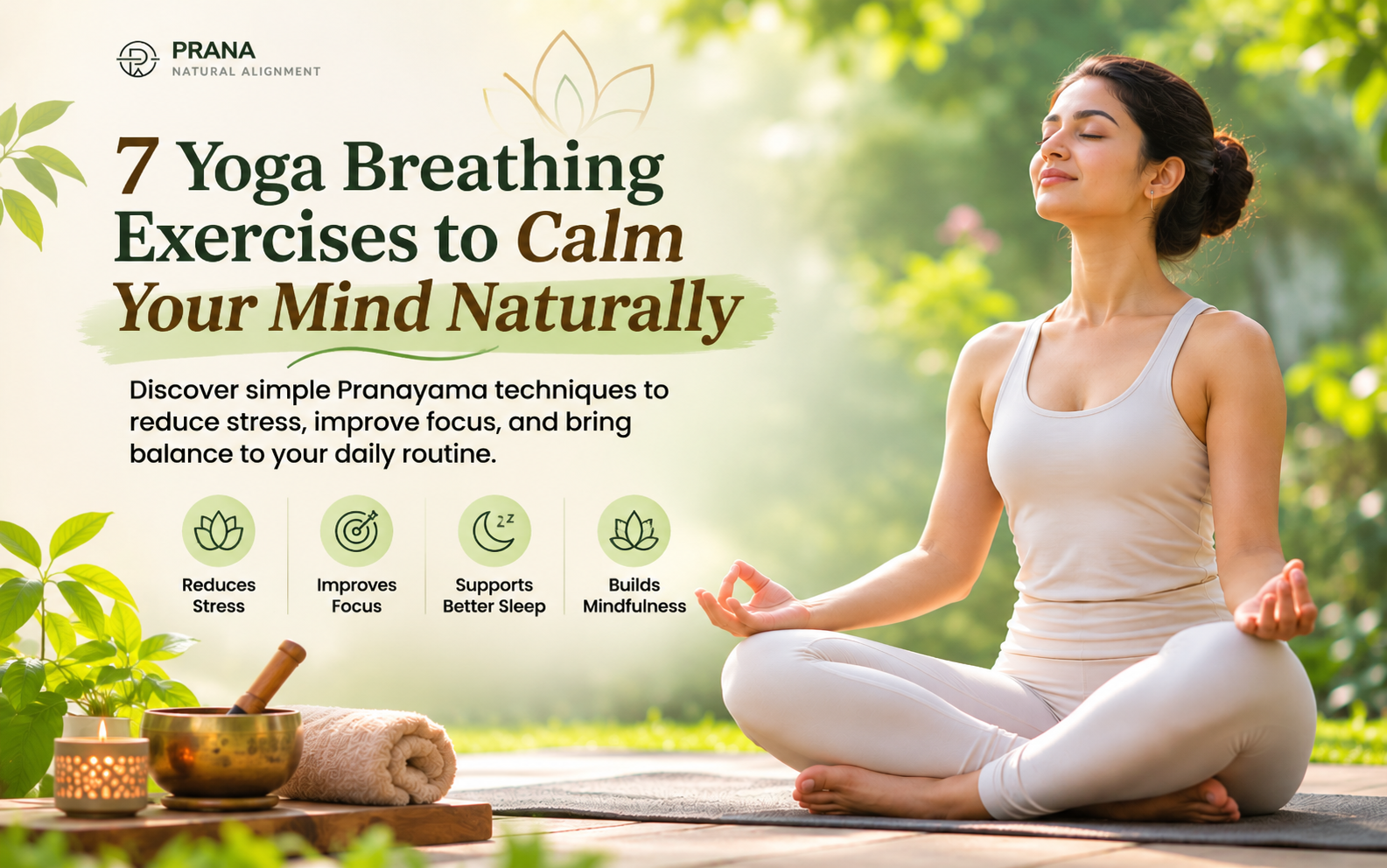
A busy lifestyle, daily responsibilities, and constant screen time can make it difficult to relax and maintain mental balance. Many people experience stress, restlessness, and difficulty sleeping because they rarely take time to slow down and focus on their breathing. Practicing yoga breathing exercises is a simple way to develop a calmer and more mindful daily routine.
In yoga, controlled breathing is known as Pranayama. It involves regulating the breath through different techniques to connect the body and mind. These practices have been used in traditional Indian wellness systems for generations and are commonly included in yoga and meditation routines.
Whether you are a beginner or an experienced yoga practitioner, learning different breathing techniques can help you develop better breathing awareness, support relaxation, and improve concentration.
In this guide, PRANA Natural Alignment explores seven yoga breathing exercises, their traditional names, how to perform them, and how to include them in your daily wellness routine.
Explore More Natural Wellness Tips
What Are Yoga Breathing Exercises?
Yoga breathing exercises are controlled breathing practices that help develop awareness of inhalation, exhalation, and breathing patterns. Traditionally known as Pranayama, these techniques are an important part of yoga.
The word Pranayama comes from two Sanskrit words: Prana, meaning life force, and Ayama, meaning expansion or regulation. Together, they describe practices that involve consciously regulating the breath.
Unlike ordinary breathing, pranayama encourages you to pay attention to the rhythm, depth, and movement of each breath.
Regular, gentle practice may support relaxation, concentration, emotional well-being, and better sleep. Research on yoga also suggests potential benefits for general wellness and stress management.
7 Yoga Breathing Exercises to Calm Your Mind Naturally
Different pranayama techniques serve different purposes. Some encourage relaxation, while others are traditionally used to develop energy, breathing awareness, and concentration.
Here are seven useful yoga breathing exercises to understand and explore.
1. Ocean’s Breath (Ujjayi Pranayama)
Ujjayi Pranayama, also called Ocean’s Breath, is a controlled breathing technique that creates a gentle ocean-like sound in the throat. It is commonly practised during yoga sessions to maintain breathing awareness and concentration.
How to perform Ujjayi breathing:
- Sit comfortably with your spine straight or begin in a suitable yoga posture.
- Close your mouth and breathe gently through your nose.
- Slightly narrow the back of your throat to create a soft sound.
- Maintain a slow and steady breathing rhythm.
- Continue for a few comfortable rounds without forcing your breath.
Potential benefits: Ujjayi breathing encourages concentration, mindful movement, and awareness of the breathing rhythm. It can also become a calming part of a meditation routine.
Best for: Focus, mindfulness, and relaxation during yoga practice.
2. Alternate Nostril Breathing (Nadi Shodhana)
Nadi Shodhana is one of the commonly practised pranayama techniques in traditional yoga. It involves breathing through one nostril at a time while gently closing the other nostril.
This practice is traditionally associated with balancing energy channels and developing mental awareness. Its slow rhythm may also support relaxation.
How to perform Nadi Shodhana:
- Sit comfortably with your back straight and shoulders relaxed.
- Use your right thumb to gently close your right nostril.
- Inhale slowly through your left nostril.
- Close your left nostril with your ring finger and release your right nostril.
- Exhale gently through your right nostril.
- Inhale through the right nostril, then switch sides and exhale through the left.
This completes one round. Begin with three to five comfortable rounds.
Potential benefits: Nadi Shodhana encourages controlled breathing, concentration, and mindfulness. It is a useful practice for people who want to include a quiet breathing exercise in their daily routine.
Best for: Relaxation, concentration, and mindful breathing.
3. Three-Part Breath (Dirga Pranayama)
Dirga Pranayama is also known as Three-Part Breath or complete yogic breathing. It teaches you to become aware of breathing movements in the abdomen, rib cage, and upper chest.
Many beginners find this technique useful because it introduces a slower and more conscious breathing pattern.
How to perform Three-Part Breath:
- Lie comfortably on your back or sit in a relaxed position.
- Place one hand on your abdomen and the other on your chest.
- Inhale slowly and notice your abdomen expanding.
- Continue the inhalation as your rib cage gently expands.
- Allow the upper chest to rise naturally.
- Exhale slowly, allowing your chest, ribs, and abdomen to relax.
Repeat for five to ten comfortable breaths.
Potential benefits: This exercise develops breathing awareness, encourages relaxation, and helps beginners understand how different parts of the torso move during breathing.
Best for: Beginners, relaxation, and developing mindful breathing habits.
4. Cooling Breath (Sheetali Pranayama)
Sheetali Pranayama is traditionally known as a cooling breathing technique. It involves inhaling through a rolled tongue and exhaling slowly through the nose.
It is traditionally included in yoga practices associated with cooling and calming sensations.
How to perform Sheetali breathing:
- Sit comfortably in a quiet place.
- Extend your tongue slightly and roll its sides into a tube, if possible.
- Inhale gently through the rolled tongue.
- Close your mouth.
- Exhale slowly through your nose.
- Repeat for a few comfortable rounds.
Some people cannot roll their tongues. Sheetkari Pranayama, which involves inhaling gently through slightly parted teeth, is a traditional alternative.
Potential benefits: Sheetali is traditionally associated with a cooling sensation and relaxation.
Best for: Cooling sensations and mindful relaxation.
Avoid practising it in cold conditions or when experiencing respiratory discomfort without appropriate guidance. It is not a treatment for fever or other medical conditions.
5. Humming Bee Breath (Bhramari Pranayama)
Bhramari Pranayama is a breathing technique in which you produce a gentle humming sound while exhaling. Its name comes from the Sanskrit word for a humming bee.
The sound and vibration create a point of focus, making this technique useful during relaxation and meditation.
How to perform Bhramari breathing:
- Sit comfortably with your eyes gently closed.
- Relax your jaw, shoulders, and facial muscles.
- Take a slow breath in through your nose.
- Exhale while making a soft humming sound.
- Pay attention to the gentle vibration around your face and head.
- Repeat for five to seven rounds.
There is no need to press firmly on your ears or apply pressure to your eyes.
Potential benefits: Bhramari encourages a slower breathing rhythm, supports mindfulness, and may help create a relaxing environment before meditation or bedtime.
Best for: Evening relaxation, meditation, and calming routines.
6. Bellows Breath (Bhastrika Pranayama)
Bhastrika Pranayama is traditionally called Bellows Breath because its breathing pattern resembles the movement of a blacksmith’s bellows. It involves active inhalation and exhalation.
Unlike slow relaxation techniques, Bhastrika is an energising practice and should be approached carefully, especially by beginners.
How to perform Bhastrika breathing:
- Sit comfortably with your spine upright.
- Relax your shoulders and keep your face comfortable.
- Take a controlled breath in through your nose.
- Exhale actively through your nose without straining.
- Continue with a few controlled cycles under the guidance of a qualified yoga instructor.
Potential benefits: Traditionally, Bhastrika is practised to develop breathing awareness and energise the body.
Best for: Experienced practitioners seeking an energising pranayama practice.
Important: Bhastrika is not a proven weight-loss technique. People with high blood pressure, heart conditions, dizziness, or other health concerns should avoid forceful breathing unless cleared and supervised by an appropriate healthcare professional.
7. Lunar Breath (Chandra Bhedana Pranayama)
Chandra Bhedana is traditionally associated with lunar energy and a calming approach to pranayama. It involves inhaling through the left nostril and exhaling through the right.
It is often included in traditional yoga routines intended for quiet, mindful practice.
How to perform Chandra Bhedana:
- Sit comfortably and keep your spine straight.
- Gently close your right nostril using your thumb.
- Inhale slowly through your left nostril.
- Close the left nostril and release the right.
- Exhale slowly through your right nostril.
- Repeat for a few comfortable rounds.
Potential benefits: This technique encourages breathing awareness and can be incorporated into a gentle relaxation routine.
Best for: Evening mindfulness and slow breathing practice.
Other Pranayama Techniques Worth Knowing
Apart from these seven techniques, a few other breathing practices are commonly included in traditional yoga routines.
| Breathing Technique | Sanskrit Name | Traditional Practice Focus | Difficulty |
| Solar Breath | Surya Bhedana | Energising and warming practice | Intermediate |
| Active Breathing | Conscious Breathing | Breathing awareness during movement | Beginner |
Solar Breath involves inhaling through the right nostril and exhaling through the left. It is traditionally associated with warming and stimulating qualities.
Conscious Breathing involves paying attention to the natural breathing pattern while walking, stretching, meditating, or performing gentle physical activities.
These techniques offer additional ways to explore pranayama beyond the seven exercises discussed above.
How to Include Yoga Breathing Exercises in Your Daily Routine
Building a consistent breathing practice does not require a complicated schedule. Even a few minutes of mindful breathing can become a meaningful part of your daily wellness routine.
Here are some practical ways to get started:
- Start with a quiet morning session: Spend five minutes practising gentle breathing after waking up. Nadi Shodhana or natural conscious breathing can be a good starting point.
- Create a relaxing evening routine: Try Dirga Pranayama or Bhramari before bedtime to establish a peaceful transition between daily activities and rest.
- Practise in a comfortable environment: Choose a quiet, well-ventilated space where you can sit without distractions.
- Maintain a consistent schedule: Practising at approximately the same time each day can make breathing exercises easier to incorporate into your Ayurveda Daily Routine.
- Combine breathing with mindful habits: Gentle yoga, adequate sleep, balanced meals, and regular physical activity can complement your breathing practice.
These simple Indian health tips focus on consistency rather than making sudden lifestyle changes.
Tips for Practising Pranayama Safely
Although gentle breathing exercises are suitable for many healthy individuals, every technique may not be appropriate for everyone.
Keep these ayurvedic tips and general yoga safety practices in mind:
- Begin with simple techniques and gradually develop your practice.
- Never force inhalation, exhalation, or breath retention.
- Avoid practising immediately after a heavy meal.
- Choose comfortable clothing that allows natural breathing.
- Stop if you experience dizziness, chest discomfort, or unusual breathlessness.
- Avoid advanced or forceful pranayama without proper instruction.
- Consult your healthcare professional before starting if you are pregnant or have a heart condition, uncontrolled blood pressure, respiratory illness, or another relevant medical concern.
The National Center for Complementary and Integrative Health also recommends learning yoga practices from qualified instructors and discussing individual health concerns with healthcare professionals.
Remember, breathing exercises are wellness practices, not replacements for medical treatment.
How Ayurveda Complements a Daily Breathing Practice
Ayurveda focuses on maintaining balance through daily habits, mindful eating, rest, and lifestyle practices. Combining gentle pranayama with these principles can help create a more consistent approach to personal wellness.
For example, a balanced routine may include:
- Starting the morning with gentle stretching and breathing exercises.
- Eating balanced meals that include a variety of nutritious foods.
- Maintaining adequate hydration throughout the day.
- Making time for meditation, relaxation, and physical activity.
- Following a regular sleep schedule.
Some people also explore ayurvedic herbs and ayurvedic health supplements as part of their wellness routines. However, supplements should be selected carefully based on individual needs, product quality, ingredients, and professional advice.
When researching the best ayurvedic products, look for transparent ingredient information and responsible manufacturing standards. Ayurveda products should complement healthy lifestyle habits rather than be presented as guaranteed solutions for stress or other medical concerns.
The traditional concept of Ojas Ayurveda is also associated with vitality, resilience, and overall well-being. It highlights the importance of balanced daily habits in traditional Ayurvedic philosophy.
For additional ayurvedic health tips, explore the wellness resources and product information available from PRANA Natural Alignment.
Conclusion
Practising yoga breathing exercises is a simple way to bring more awareness, relaxation, and mindfulness into everyday life. Techniques such as Ujjayi, Nadi Shodhana, Dirga Pranayama, Sheetali, Bhramari, Bhastrika, and Chandra Bhedana offer different approaches to conscious breathing.
You do not need to master every technique at once. Begin with gentle exercises, practise consistently, and pay attention to how your body responds. Combining mindful breathing with balanced nutrition, adequate rest, and healthy lifestyle habits can support your overall wellness journey.
At PRANA Natural Alignment, the philosophy of natural wellness encourages a thoughtful connection between traditional practices and everyday healthy habits. Explore more Ayurvedic wellness resources, learn about traditional approaches to well-being, and develop a daily routine that supports a balanced lifestyle.
Start with one mindful breath at a time and make wellness a consistent part of your everyday life.
Frequently Asked Questions
1. Which yoga breathing exercise is best for beginners?
Nadi Shodhana, Dirga Pranayama, and Bhramari are useful starting points for beginners. They involve gentle breathing patterns and encourage concentration and relaxation. Start with a few comfortable rounds and learn the correct technique before increasing practice time.
2. How many minutes should I practise yoga breathing exercises daily?
Beginners can start with five minutes of gentle breathing practice daily. As they become comfortable, they may gradually increase the duration to 10–15 minutes. The appropriate duration depends on individual comfort, experience, and the technique being practised.
3. Can yoga breathing exercises help reduce stress?
Gentle breathing exercises may support relaxation and help people manage everyday stress. Techniques such as Bhramari, Nadi Shodhana, and Dirga Pranayama encourage mindful breathing and concentration. However, they are not substitutes for professional mental healthcare when needed.
4. What is the best time to practise pranayama?
Many people prefer practising gentle pranayama in the morning because it creates an opportunity for mindful preparation before daily activities. Relaxing techniques can also be practised in the evening. Choose a comfortable time and avoid practising immediately after a heavy meal.
5. Are yoga breathing exercises safe for everyone?
Gentle breathing practices are generally suitable for many healthy individuals when performed correctly. However, forceful techniques and breath retention may not be appropriate for people with certain medical conditions. Pregnant individuals and people with heart or respiratory conditions should seek professional advice before beginning.