
12 Science-Backed Benefits of Pranayama for Mind and Body
Do you often feel stressed, mentally exhausted, or struggle to get a good night’s sleep? Your breathing habits may play a bigger role in your overall well-being than you realise. Pranayama, an ancient yogic breathing practice, focuses on controlling and regulating the breath to support the connection between the mind and body.
Modern research suggests that certain breathing techniques can influence the nervous system, stress responses, emotional regulation, and cardiovascular health. Understanding the benefits of pranayama can help you introduce simple breathing exercises into your daily routine without needing expensive equipment or complicated techniques.
For people across Australia interested in natural wellness, PRANA Natural Alignment explores traditional Ayurvedic principles, mindful living, and practical approaches to supporting everyday health.
Read Our Guide to Ayurvedic Wellness.
What Is Pranayama and How Does It Benefit Your Mind and Body?
Pranayama is a traditional yogic practice involving the conscious regulation of breathing. It combines different techniques of inhalation, exhalation, and breath awareness to support physical relaxation and mental balance.
The word comes from two Sanskrit terms: ‘Prana’, meaning life force, and ‘Ayama’, meaning expansion or regulation. Together, they describe practices intended to regulate the flow of vital energy through controlled breathing.
Unlike ordinary breathing, which happens automatically, pranayama encourages you to pay attention to your breathing rhythm. Depending on the technique, you may practise slow breathing, alternate-nostril breathing, or gentle breathing with longer exhalations.
Research published in scientific journals suggests that slow-paced breathing may influence autonomic nervous system activity, heart rate variability, and emotional regulation.
For people exploring yoga for anxiety, gentle breathing techniques can provide a practical way to manage moments of tension. They are not a replacement for professional mental health care, but they may complement other healthy coping strategies.
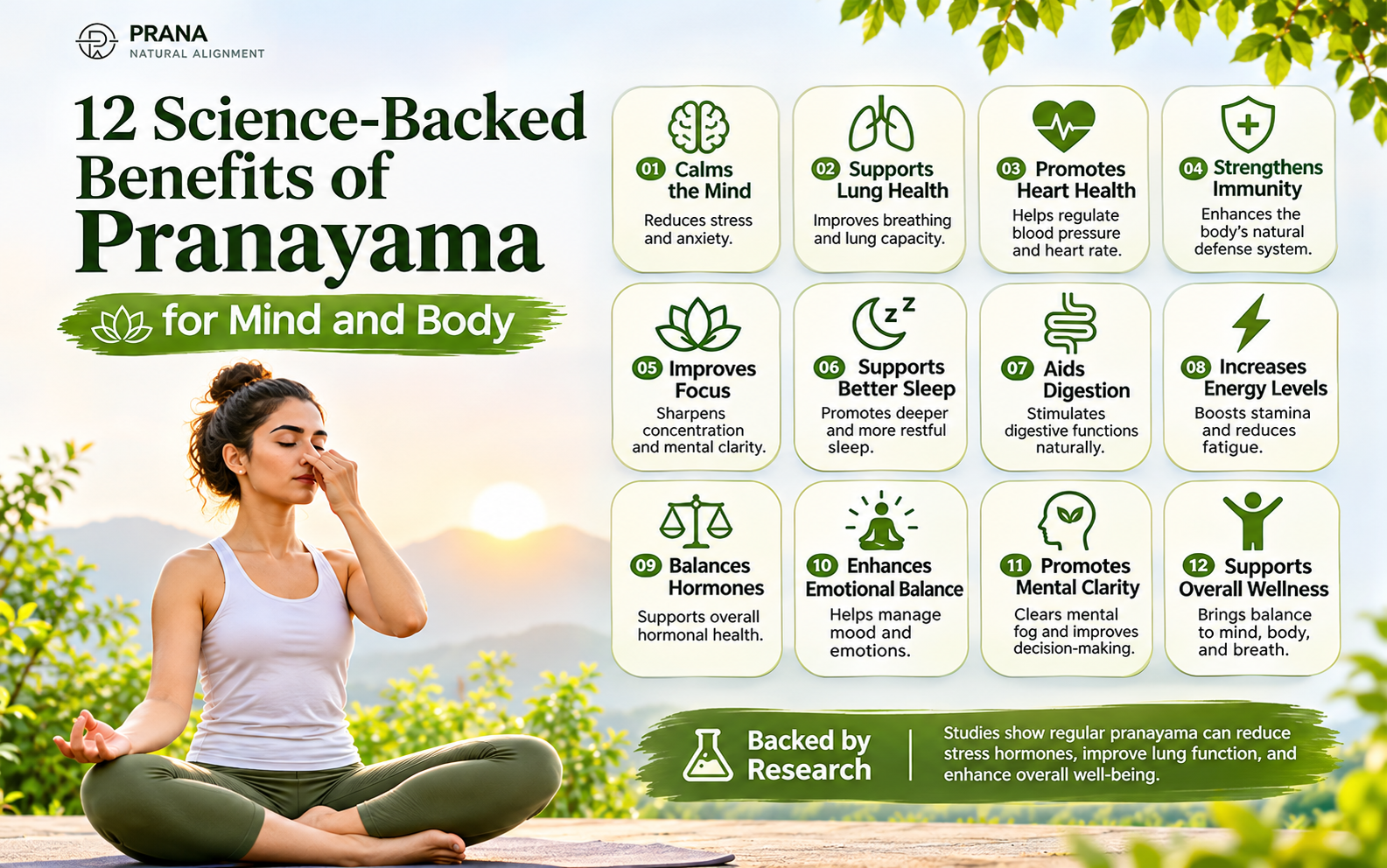
12 Science-Backed Benefits of Pranayama
Here are 12 potential ways regular breathing practice may support your health.
- Helps Reduce Stress
Slow, controlled breathing can encourage the body’s relaxation response. Research suggests that breathing exercises may reduce perceived stress and support parasympathetic nervous system activity, helping the body move away from a heightened stress response.
- Supports Better Emotional Regulation
Conscious breathing gives you an opportunity to pause before reacting to difficult situations. Regular practice may improve awareness of emotional responses and help you approach everyday challenges with greater composure.
- May Improve Sleep Quality
Relaxing breathing patterns before bedtime can help calm racing thoughts and prepare the body for rest. These breathing exercises for sleep may be particularly helpful when occasional stress or mental activity makes it difficult to unwind.
- Supports Cardiovascular Health
Slow breathing can influence heart rate and blood pressure responses. Some studies have found improvements in blood pressure measurements among people practising regular slow-breathing exercises, although results vary.
- Improves Breathing Awareness
Pranayama encourages you to notice how quickly, deeply, and comfortably you breathe. This awareness can help you recognise shallow or irregular breathing patterns and practise more controlled breathing during everyday activities.
- May Improve Focus and Concentration
Paying attention to each inhalation and exhalation requires mental discipline. This repeated focus may help improve attention and reduce distractions, making breathing exercises a useful addition to a mindful daily routine.
- Supports Nervous System Balance
Breathing and the nervous system are closely connected. Slow, rhythmic breathing may influence autonomic activity, including the balance between sympathetic and parasympathetic responses.
- Encourages Mind-Body Awareness
Pranayama connects physical sensations with mental awareness. By noticing changes in your breathing, posture, and tension, you can develop a better understanding of how your body responds to different situations.
- May Support Respiratory Function
Some research suggests that selected yogic breathing exercises can improve respiratory muscle performance and certain measures of lung function. However, pranayama does not replace medical treatment for respiratory conditions.
- Helps Manage Everyday Anxiety
A steady breathing rhythm can provide a simple point of focus during stressful moments. Practising gentle yoga breathing exercises may help some individuals feel calmer and more grounded.
- Encourages Mindful Daily Habits
Pranayama creates an opportunity to step away from constant activity and focus on the present moment. Even a few minutes of intentional breathing can become a meaningful part of a consistent wellness routine.
- Complements a Natural Wellness Lifestyle
Breathing practices can work alongside movement, balanced nutrition, adequate sleep, and mindful routines. This broader approach to natural healing focuses on supporting everyday well-being rather than relying on a single technique.
How to Practise Pranayama: A Simple Daily Routine
You do not need hours of practice to experience the potential benefits of pranayama. Beginners can start with approximately 5–10 minutes of gentle breathing exercises and gradually increase their practice as they become comfortable.
The most important factors are consistency, comfort, and correct technique.
Step 1: Choose a Comfortable Position
Sit on a chair or cushion with your back comfortably upright. Relax your shoulders, keep your jaw loose, and rest your hands on your thighs.
Step 2: Observe Your Natural Breathing
Close your eyes if comfortable and notice how your breath moves naturally. Avoid changing your breathing immediately. Spend one or two minutes simply observing your inhalation and exhalation.
Step 3: Practise Diaphragmatic Breathing
Place one hand on your chest and another on your abdomen. Breathe gently through your nose, allowing your abdomen to expand comfortably as you inhale.
Exhale slowly without forcing the breath. Repeat for several comfortable cycles.
Step 4: Try Alternate-Nostril Breathing
Nadi Shodhana, commonly known as alternate-nostril breathing, involves breathing through one nostril at a time.
Gently close one nostril, inhale through the other, switch sides, and exhale. Continue alternating at a comfortable pace without holding your breath.
Step 5: Finish with Quiet Breathing
Return to your natural breathing rhythm. Sit quietly for a minute and notice how your body feels.
How often should you practise?
- Beginners: 5 minutes daily.
- Regular practitioners: 10–15 minutes daily.
- Experienced practitioners: Longer sessions according to comfort and appropriate instruction.
Many beginners worry that they need to master complicated techniques to experience the benefits of pranayama. In reality, starting with gentle breathing and maintaining consistency is a sensible approach.
Important Safety Considerations
Pranayama should feel comfortable rather than physically demanding. Avoid forceful breathing, prolonged breath retention, or rapid techniques without appropriate instruction.
If you experience dizziness, breathlessness, chest discomfort, or anxiety during practice, stop and return to normal breathing. People with respiratory or cardiovascular conditions, pregnancy, or a history of panic attacks should seek appropriate medical guidance before attempting intensive breathing techniques.
Additional Wellness Practices That Complement Pranayama
Breathing exercises are one part of a broader approach to maintaining physical and mental well-being. Traditional Ayurveda also considers individual constitution, daily habits, diet, and lifestyle when discussing health.
Understanding Vata, Pitta, and Kapha
In Ayurveda, the three doshas represent different functional principles associated with the body and mind. Understanding ayurveda vata pitta kapha can introduce readers to traditional perspectives on individual constitution, seasonal routines, and lifestyle balance.
These concepts belong to the traditional Ayurvedic framework and should not be confused with medically established diagnoses.
Supporting Everyday Wellness Through Ayurveda
Alongside mindful breathing, people may explore traditional Ayurvedic health supplements as part of their broader interest in wellness. Supplement ingredients, quality, safety, and potential interactions with medications should always be considered before use.
Exploring Ayurvedic Wellness Products
An ayurvedic health product may include traditional herbal formulations or wellness-related products inspired by Ayurvedic practices. Understanding ingredients, sourcing, product quality, and evidence behind individual claims helps consumers make informed decisions.
Pranayama, balanced nutrition, mindful movement, and appropriate wellness products can be considered within a broader lifestyle approach rather than as substitutes for medical care.
Safety and Best Practices for Long-Term Pranayama Practice
A consistent and comfortable routine is more useful than pushing yourself through difficult breathing techniques.
Follow these practices to make your routine safer and more sustainable:
- Start gradually: Begin with simple breathing exercises before attempting advanced techniques.
- Choose the right environment: Practise somewhere quiet, comfortable, and well-ventilated.
- Avoid excessive effort: Never force inhalation, exhalation, or breath retention.
- Maintain consistency: Short, regular sessions can be easier to maintain than occasional lengthy sessions.
- Learn proper techniques: Follow reliable instructional resources or seek guidance from a suitably qualified yoga instructor.
- Pay attention to your body: Stop whenever a technique causes discomfort, dizziness, or unusual breathlessness.
Scientific studies support some potential benefits of controlled breathing, but research findings differ depending on the technique, duration, and participants. Pranayama should therefore be viewed as a complementary wellness practice, not a treatment for disease.
Why Explore PRANA Natural Alignment in Australia?
For Australians interested in understanding the connection between traditional wellness practices and modern lifestyle habits, PRANA Natural Alignment offers an information-focused approach to natural health and Ayurvedic principles.
Its wellness content explores topics such as pranayama, mindful living, yoga practices, Ayurvedic traditions, and everyday lifestyle habits. Readers can learn about traditional approaches while developing a better understanding of the scientific research behind breathing and mind-body wellness.
Rather than treating breathing exercises as a quick solution to every health concern, the focus is on understanding their potential role within a balanced lifestyle.
Whether you are a beginner exploring conscious breathing or someone interested in traditional Ayurvedic knowledge, learning about these practices can help you make more informed decisions about your everyday wellness routine.
Conclusion:
Pranayama offers a simple way to develop greater awareness of your breathing while supporting relaxation, emotional balance, and overall well-being. From stress management and sleep support to improved breathing awareness and mindfulness, its potential benefits make it a valuable addition to a balanced lifestyle.
The most useful takeaway is to start small. Choose a comfortable technique, practise consistently, and pay attention to how your body responds. You do not need complicated breathing exercises to begin developing a healthier relationship with your breath.
Explore more evidence-informed wellness insights, traditional Ayurvedic knowledge, and mindful living resources through PRANA Natural Alignment. Start learning about natural approaches to everyday well-being and make conscious breathing a regular part of your routine.
Frequently Asked Questions
1. What are the main benefits of pranayama?
The main benefits of pranayama include stress management, improved breathing awareness, relaxation, better emotional regulation, and potential improvements in sleep quality. Research also suggests that slow breathing may support cardiovascular and autonomic nervous system function.
2. How long should I practise pranayama every day?
Beginners can start with 5–10 minutes of gentle breathing exercises daily. As you become comfortable, you can gradually increase the duration without forcing your breathing.
3. Can pranayama help with anxiety and stress?
Yes, gentle pranayama techniques may help some people manage everyday stress and anxiety by encouraging slower breathing and relaxation. However, they should complement rather than replace appropriate mental health care.
4. Are there pranayama classes or resources near me?
You can explore yoga studios, qualified yoga instructors, and reliable online learning resources near your location. Look for beginner-friendly instruction that explains breathing techniques, precautions, and appropriate practice methods.
5. What is the best time to practise pranayama?
Morning is a popular time because it offers an opportunity to begin the day with a calm and focused mindset. Evening practice can also be useful for relaxation, provided you choose gentle techniques that do not cause discomfort or overstimulation.