
What Is Your Ayurvedic Body Type? A Guide to Vata, Pitta, and Kapha
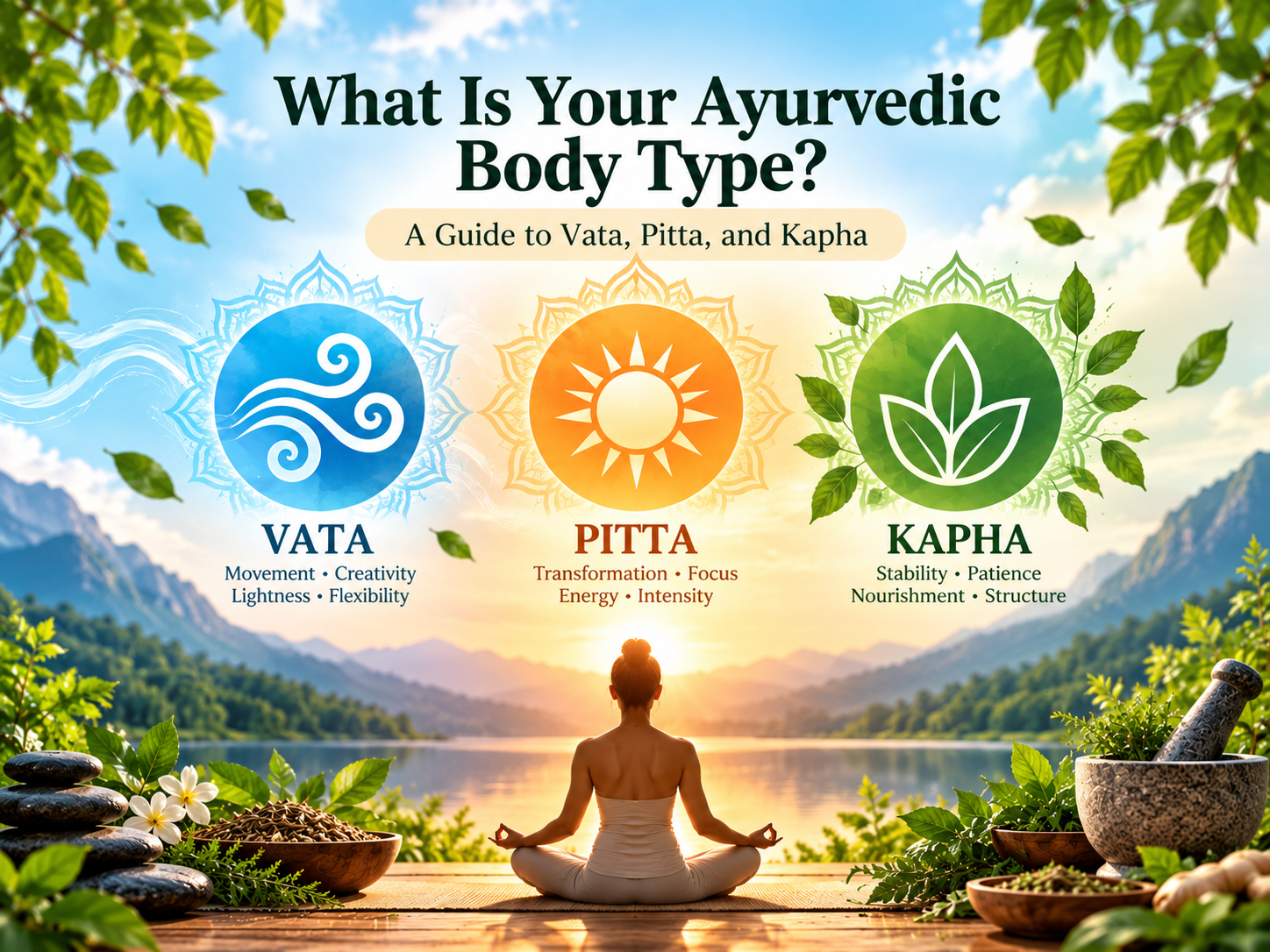
Do you often feel cold, struggle with irregular digestion, experience restlessness, or feel sluggish even after getting enough sleep? Ayurveda offers a traditional way to understand these patterns through three fundamental energies: Vata, Pitta, and Kapha. Together, they provide a framework for exploring how your body and mind may respond to food, daily habits, stress, and changes in the environment.
Understanding ayurveda vata pitta kapha can help you identify your natural tendencies and make more thoughtful lifestyle choices. Rather than following the same wellness routine as everyone else, you can explore habits that align with your individual constitution, also known as Prakriti.
This guide explains the three Ayurvedic body types, how to recognize their characteristics, and how to apply these principles to everyday life. It also explores practical routines and educational resources for people interested in learning more about Ayurveda.
What Are Vata, Pitta, and Kapha in Ayurveda?
Vata, Pitta, and Kapha are the three doshas in Ayurveda, a traditional Indian system of health and wellness. Each dosha represents a combination of qualities that Ayurveda uses to describe patterns in physical function, digestion, energy, and temperament.
The three doshas are associated with the five traditional elements: space, air, fire, water, and earth. According to Ayurvedic philosophy, everyone has all three doshas, but their proportions differ from person to person.
1. Vata: The Principle of Movement
Vata is associated with space and air. It represents movement, including breathing, circulation, nerve activity, and the movement of food through the digestive system in traditional Ayurvedic descriptions.
People with prominent Vata characteristics are often described as energetic, imaginative, curious, and adaptable. When their routines become irregular, Ayurveda associates Vata imbalance with dryness, restlessness, variable appetite, and difficulty settling down.
Common Vata-associated characteristics include:
- A preference for warmth and regular meals.
- An active imagination and quick thinking.
- Variable energy levels or an irregular daily schedule.
- A tendency toward dryness or feeling unsettled during stressful periods.
Lifestyle tip: Ayurveda traditionally recommends warmth, regular meals, gentle movement, and consistent sleep habits for people seeking to balance Vata.
2. Pitta: The Principle of Transformation
Pitta is associated with fire and water. It represents transformation, including digestion, metabolism, and the processing of experiences, according to Ayurvedic philosophy.
People with prominent Pitta characteristics are often described as focused, organized, analytical, and goal-oriented. Traditional descriptions associate aggravated Pitta with irritability, feeling overheated, and digestive discomfort.
Common Pitta-associated characteristics include:
- A preference for a comfortable, cool environment.
- Strong focus and a structured approach to work.
- Discomfort during excessive heat.
- A tendency to become impatient under pressure.
Lifestyle tip: Regular breaks, adequate hydration, moderate exercise, and avoiding excessive heat may support a balanced routine.
3. Kapha: The Principle of Structure and Stability
Kapha is associated with earth and water. It represents stability, structure, lubrication, and cohesion within the traditional Ayurvedic model.
People with prominent Kapha characteristics are often described as calm, patient, dependable, and steady. Ayurveda traditionally associates Kapha imbalance with sluggishness, heaviness, and difficulty maintaining motivation.
Common Kapha-associated characteristics include:
- A preference for comfortable, familiar routines.
- Steady energy and a patient temperament.
- A tendency to feel sluggish after prolonged inactivity.
- Enjoyment of nourishing meals and restful activities.
Lifestyle tip: Regular physical activity, varied meals, and a consistent waking time may help create a more energetic daily rhythm.
Can You Have More Than One Ayurvedic Body Type?
Yes. Most people are described through a combination of doshas rather than fitting perfectly into one category. For example, someone may have a Vata-Pitta constitution, combining movement and creativity with focus and determination.
Your Ayurvedic constitution is traditionally understood as your natural baseline, while temporary changes in sleep, appetite, energy, or comfort may be interpreted as changes in your current state. These are traditional wellness concepts, not medically validated diagnostic categories.
Understanding ayurveda vata pitta kapha is therefore less about assigning yourself a permanent label and more about exploring which habits help you maintain a comfortable, sustainable lifestyle.
How to Understand Your Dosha and Apply It to Daily Life
There is no single test that can definitively determine your Ayurvedic body type. A traditional assessment considers several aspects of your constitution, including long-standing physical characteristics, digestion, sleep patterns, preferences, and temperament.
If you are new to Ayurveda, begin by observing your usual patterns rather than judging yourself based on one difficult day.
Step 1: Observe Your Natural Tendencies
Consider which characteristics have been relatively consistent throughout your life. Do you naturally prefer movement and variety, work best with clear goals, or feel most comfortable with steady routines? These observations can provide a starting point for exploring Ayurvedic concepts.
Step 2: Look at Your Daily Habits
Notice how meal timing, physical activity, sleep, and stress affect your energy and comfort. Keep a simple journal for one or two weeks to identify patterns instead of relying on memory alone.
Step 3: Make Small, Practical Adjustments
Choose one habit to experiment with, such as maintaining consistent meal times, walking regularly, or establishing a relaxing bedtime routine. Evaluate whether the change is useful rather than assuming that every recommendation associated with your dosha will suit you.
Step 4: Avoid Self-Diagnosis
Online quizzes can introduce you to Ayurvedic terminology, but they cannot establish a medical diagnosis or reliably determine every aspect of your constitution. Persistent digestive symptoms, sleep problems, fatigue, or other health concerns deserve appropriate medical evaluation.
How Can an Ayurvedic Daily Routine Support Your Well-Being?
An Ayurvedic lifestyle does not require expensive products or complicated rituals. Start with a few consistent habits and adapt them to your schedule, individual needs, and any advice from qualified healthcare professionals.
An Ayurvedic Morning Routine can include waking at a reasonably consistent time, drinking water according to your needs, getting natural daylight, performing gentle movement, and allowing time for a calm breakfast. You do not need to follow every traditional morning practice to establish a useful routine.
Building a Daily Schedule Around Your Needs
A daily routine ayurveda approach emphasizes consistency and awareness rather than rigid rules. Someone with an unpredictable schedule might benefit from regular meal breaks and a wind-down ritual, while another person may prefer incorporating movement into the morning.
Try this simple daily structure:
- Morning: Wake at a consistent time, get daylight, and move gently.
- Midday: Eat balanced meals, take short breaks, and remain physically active.
- Evening: Reduce stimulating activities, prepare for the next day, and establish a relaxing bedtime routine.
Treat these suggestions as flexible lifestyle ideas, not prescriptions based on your body type. Your work schedule, nutritional requirements, climate, and medical needs should guide your choices.
What Are the Potential Benefits of Understanding Your Dosha?
Learning about Vata, Pitta, and Kapha can encourage greater awareness of personal habits and help you build a wellness routine that feels manageable.
Potential benefits include:
- Better self-awareness: Recognize how your daily schedule, environment, and stress levels influence your comfort.
- More consistent habits: Develop practical routines for meals, movement, relaxation, and sleep.
- A personalized approach to wellness: Explore different practices instead of assuming one routine suits everyone.
- Greater cultural understanding: Learn about traditional Indian health philosophy and its historical concepts.
- More informed decisions: Distinguish traditional wellness guidance from claims that require scientific evidence.
Understanding Ojas in Ayurveda
In ojas ayurveda, ojas is traditionally described as a subtle essence associated with vitality, resilience, and overall well-being. Ayurvedic texts connect it with nourishment and the body’s capacity to maintain balance, although ojas is not a scientifically established measurable substance.
From a practical perspective, you can use this concept as an opportunity to reflect on adequate nutrition, restful sleep, emotional well-being, and sustainable habits. These foundations matter regardless of your dosha.
Can Ayurvedic Herbs Help Balance Your Dosha?
Ayurveda includes many traditional plants and herbal preparations, but their effects, safety, and evidence vary considerably. The best ayurvedic herbs depend on the specific purpose, individual circumstances, product quality, and possible interactions with medicines.
Do not assume an herb is safe simply because it is natural or traditionally used. Some Ayurvedic preparations may contain contaminants or ingredients that interact with medications. Consult a qualified healthcare professional before using herbal products, especially during pregnancy, while breastfeeding, or when managing a medical condition.
Breathing and Relaxation for Better Sleep
Breathing exercises for sleep may help some people relax before bedtime. A simple approach is to breathe gently through the nose, allowing the exhalation to remain comfortable and unforced for a few minutes.
Avoid forceful breathing, prolonged breath-holding, or any technique that causes dizziness or discomfort. Breathing exercises can complement good sleep habits, but persistent insomnia or breathing difficulties during sleep should be assessed by a healthcare professional.
Learning Ayurveda Beyond the Basics
If you want to understand doshas, traditional lifestyle principles, and the context behind Ayurvedic practices, opportunities to learn ayurveda online can provide a convenient starting point. Look for educational resources that explain traditional concepts clearly, distinguish them from modern medical evidence, and avoid promising guaranteed health outcomes.
Audio learning can also fit into a busy schedule. A meditation podcast may offer guided relaxation, mindfulness exercises, or discussions about meditation traditions that you can explore at your own pace.
How to Approach Ayurvedic Practices Safely
A thoughtful approach to Ayurveda combines respect for traditional knowledge with attention to individual health needs and current scientific evidence. You can explore its lifestyle practices without treating every traditional explanation as a proven medical fact.
Use the following process when introducing Ayurvedic ideas into your routine:
- Identify your goal. Decide whether you want to improve your sleep habits, establish regular meal times, learn meditation, or understand traditional wellness concepts.
- Review your current routine. Consider your sleep schedule, diet, physical activity, work demands, and existing health concerns.
- Select one manageable practice. Introduce a simple habit, such as a regular bedtime or gentle morning movement, before adding more changes.
- Monitor your experience. Keep track of your comfort, energy, sleep, and any unwanted effects.
- Seek appropriate guidance. Consult qualified healthcare professionals for medical symptoms and discuss herbal products or supplements before use.
What Standards Should You Look for in Ayurvedic Education?
Choose educational material that identifies its sources, explains traditional terminology accurately, and distinguishes cultural practices from evidence-supported health recommendations. If a course covers herbal preparations, it should address product quality, possible interactions, and safety rather than focusing exclusively on potential benefits.
The same principle applies when exploring ayurveda vata pitta kapha assessments. A responsible resource should acknowledge that body-type descriptions are part of a traditional framework, not a substitute for medical testing or individualized healthcare.
Why Choose PRANA Natural Alignment for Ayurvedic Learning?
For readers interested in exploring Ayurveda through accessible wellness education, PRANA Natural Alignment offers a starting point for learning about traditional Ayurvedic principles and incorporating mindful habits into everyday life.
When evaluating any Ayurveda education or wellness resource, consider whether the material explains concepts clearly, provides practical guidance, and sets realistic expectations. Look for educational support that helps you understand the reasoning behind a practice instead of simply telling you to follow a particular routine.
If you are exploring ayurveda vata pitta kapha for the first time, begin with the fundamentals. Understanding the three doshas, their traditional qualities, and the importance of individual differences can help you approach further learning with greater confidence.
Conclusion:
Understanding ayurveda vata pitta kapha can introduce you to a traditional framework for exploring your natural tendencies and developing more consistent wellness habits. The most useful starting point is not to label yourself permanently, but to observe how your daily choices affect your comfort, energy, and routine.
Begin with regular sleep, balanced nutrition, appropriate physical activity, and a few minutes of relaxation. Explore traditional Ayurvedic concepts with an open mind while using reliable health information to guide important decisions.
For further guidance on Ayurvedic principles, wellness education, and practical lifestyle habits, connect with PRANA Natural Alignment to explore available learning resources and find an approach that fits your interests.
Frequently Asked Questions
1. How do I know whether I am Vata, Pitta, or Kapha?
Start by learning the traditional characteristics associated with each dosha and reflecting on your long-term tendencies. A qualified Ayurvedic practitioner may offer a traditional assessment, but online quizzes and symptom lists cannot establish a medical diagnosis.
2. Can my Ayurvedic body type change over time?
Ayurveda traditionally considers your underlying constitution relatively stable while recognizing that your current condition may change with age, lifestyle, stress, and seasonal influences. These are traditional concepts, and changes in symptoms should not automatically be attributed to a dosha imbalance.
3. What is the cost of an Ayurvedic body-type assessment?
The cost depends on the provider, appointment length, assessment method, and whether the service includes additional educational guidance. Check the provider’s current fees before booking, as there is no single standard price for Ayurvedic assessments.
4. How can I find Ayurveda guidance near me?
Search for an Ayurvedic practitioner or Ayurveda education provider near your location and review their qualifications, experience, and service details. Confirm whether they provide educational consultations, traditional wellness guidance, or medical services, and verify any healthcare credentials relevant to your needs.
5. Is the Ayurveda Vata Pitta Kapha approach scientifically proven?
Vata, Pitta, and Kapha are traditional Ayurvedic concepts, and the classification of people into dosha types has not been established as a validated medical diagnostic system. Some lifestyle practices associated with Ayurveda may support general well-being, but evidence varies by practice and specific health outcome.