
Pranayama for Dosha Harmony: Cultivating Balance Through Breath
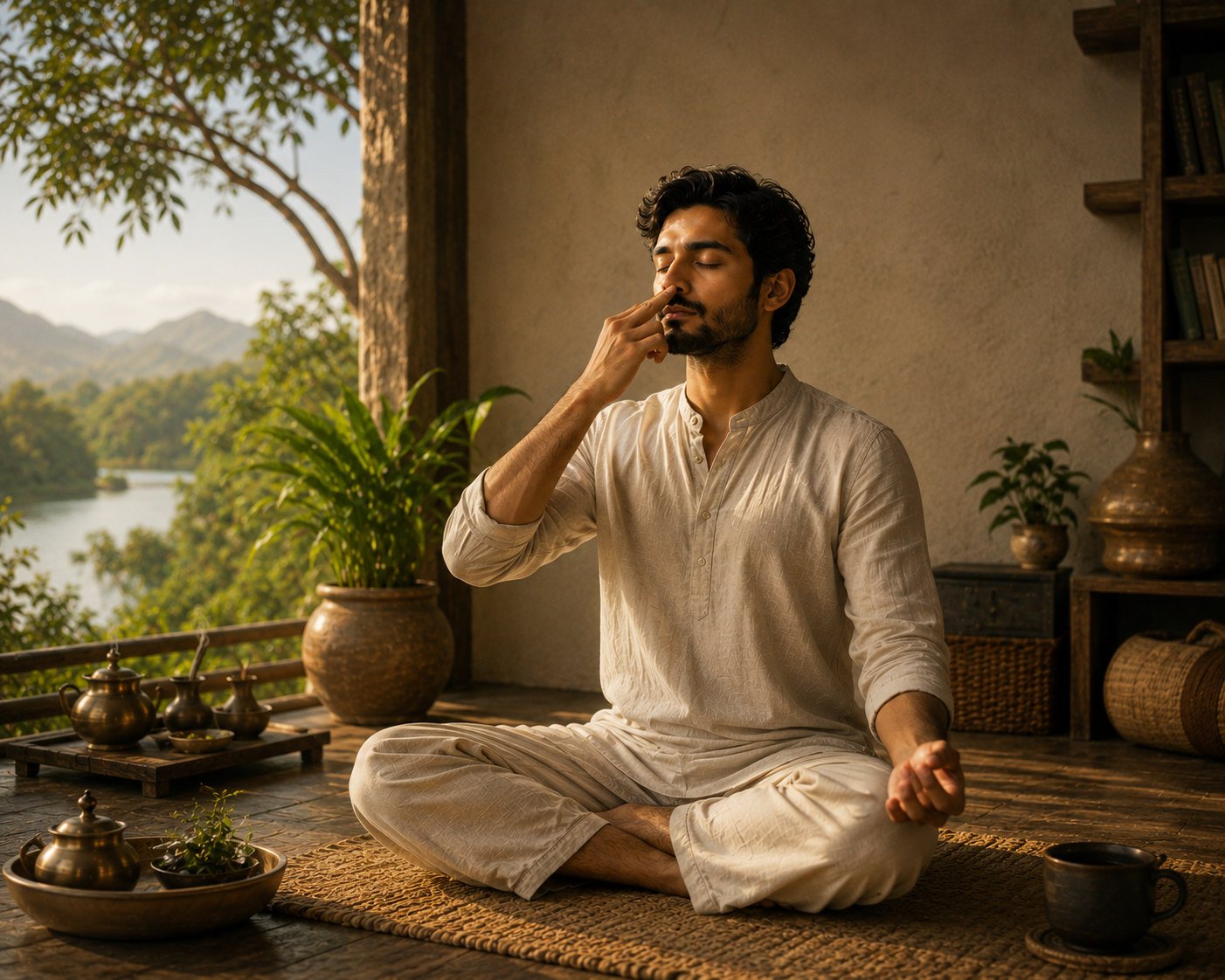
The breath holds a quiet power to harmonize the body’s elemental forces. In Ayurveda, where health is defined as the balanced interplay of Vata, Pitta, and Kapha, conscious breathing emerges as a refined tool for restoring equilibrium.
Rather than imposing change, pranayama works subtly with the doshas’ inherent qualities, guiding them toward their natural state of cooperation.
When life’s demands disturb this balance through irregular schedules, emotional intensity, or seasonal shifts the breath often reflects the discord first.
Ayurveda observes that restoring rhythmic, intentional breathing can recalibrate these forces from within, supporting mental serenity, digestive strength, and sustained energy without external intervention.
This perspective encourages us to view pranayama not as a rigid technique but as a living dialogue with our unique constitution, one that deepens self-understanding and nurtures resilience across all seasons of life.
Understanding Dosha Influences on Breath
Vata dosha, light and mobile, governs the movement of breath itself. When aggravated, breathing may become quick, shallow, or irregular, accompanied by mental restlessness or dryness in the body.
Pitta dosha, with its transformative heat, influences the intensity and temperature of breath; excess may produce forceful or warm exhalations alongside irritability or inflammation.
Kapha dosha, steady and cohesive, tends toward slower, deeper breathing when balanced, yet excess can manifest as heavy or congested respiration.
Ayurveda teaches that these patterns are not fixed but responsive. By observing the breath’s texture, pace, and ease throughout the day, one gains insight into current doshic tendencies.
This awareness forms the foundation for gentle, targeted breathing practices that encourage each dosha to express its positive qualities Vata’s creativity, Pitta’s clarity, Kapha’s endurance while softening excesses.
Classical Approaches to Balancing Through Breath
Ayurvedic understanding integrates breath regulation to purify and direct prana. Alternate nostril breathing, performed with gentle attention, helps harmonize the subtle energies associated with the left and right sides of the body, supporting overall doshic equilibrium and mental steadiness.
Cooling breaths, drawn through the curled tongue or teeth, may soothe excess heat linked to Pitta.
Rhythmic, expansive breaths can encourage movement where Kapha stagnation appears, always approached with respect for individual capacity.
These methods emphasize quality over quantity. The focus remains on smoothness, awareness, and the natural lengthening of breath rather than forceful manipulation.
Ayurveda reminds us that true balance arises when practices align with one’s current state, season, and constitution, allowing prana to nourish rather than deplete.
Gentle Daily Integrations
Observe your breath upon rising and retiring. Note its qualities and how they shift after meals, exercise, or emotional experiences. This simple noticing cultivates sensitivity to doshic fluctuations.
For Vata tendencies, favor longer, smoother exhalations in quiet moments. For Pitta qualities, incorporate cooling visualizations or breaths during warmer parts of the day.
For Kapha tendencies, gentle movement paired with breath can invite lightness.
Always practice in a comfortable seated position, with the spine naturally erect, and return to normal breathing if discomfort arises.
Pairing breath awareness with mindful eating chewing slowly and breathing between bites further supports Agni and doshic harmony.
Over weeks, these small consistencies build a foundation of steadiness that extends beyond the mat or cushion into everyday interactions.
Returning to Natural Equilibrium
Through the lens of Ayurveda, pranayama becomes an elegant means of honoring the body’s intelligence.
By working with rather than against the doshas, we cultivate a state where vitality flows freely and the mind rests in clarity.
This path of gentle self-regulation invites ongoing discovery. We encourage you to explore additional resources on Ayurvedic principles available on this platform, deepening your connection to these timeless teachings of balance and well-being.