
Monsoon Rains and Autumn’s Glow: Ritucharya for Varsha and Sharad
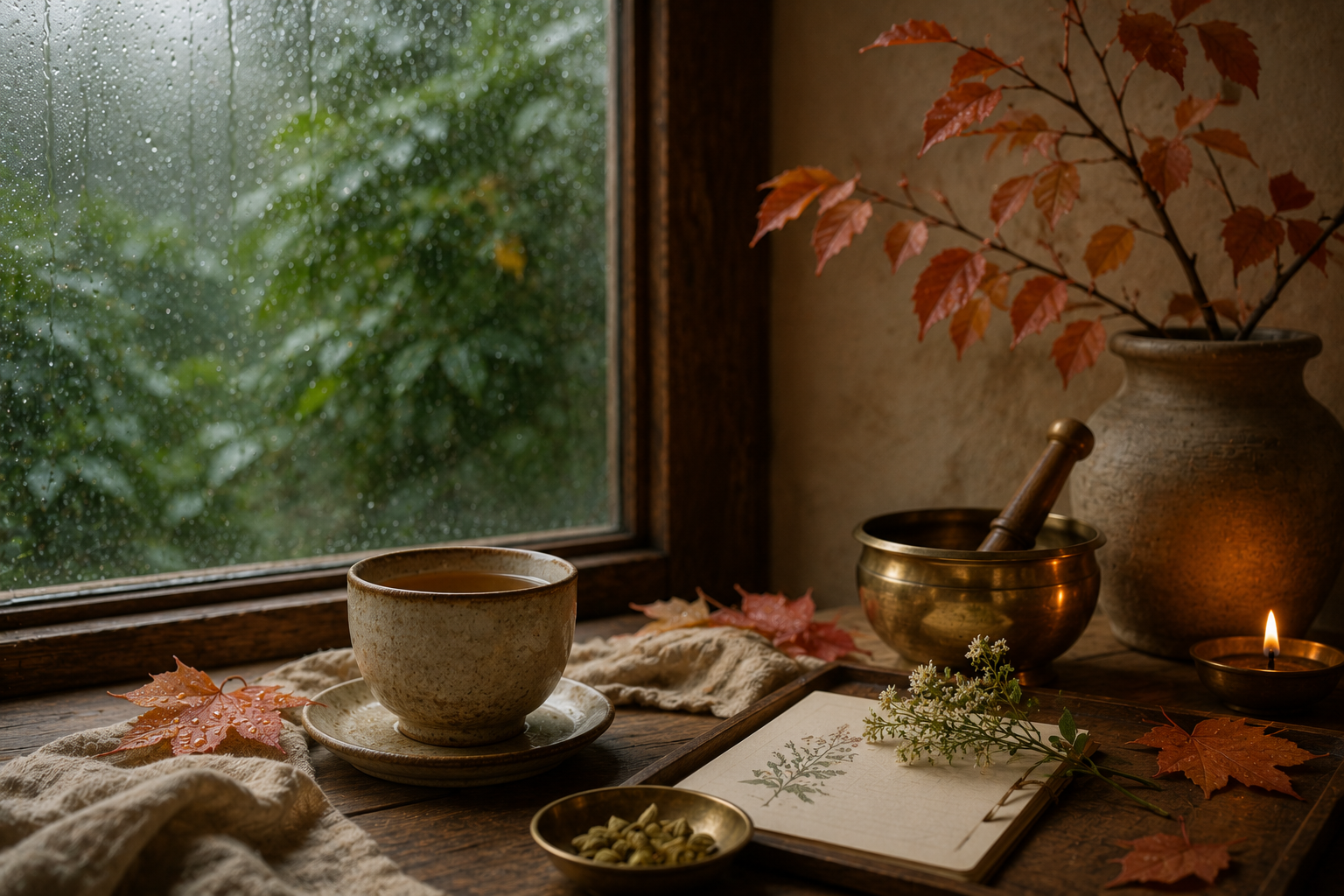
When the skies open and the earth drinks deeply, or when golden light returns after the rains, the body experiences its own quiet transitions.
In Ayurveda, the monsoon season Varsha brings cool, damp qualities that can disturb Vata, leading to internal dryness despite external moisture, digestive irregularity, joint discomfort, or mental restlessness.
Autumn Sharad then offers a brief return of warmth and clarity before winter arrives, which can re-aggravate Pitta. Ritucharya provides a steady compass for these in-between months, helping us stay grounded, well-nourished, and clear as nature shifts.
These seasons remind us that balance is dynamic and requires ongoing attunement. The same principles of observing qualities and applying opposites guide us whether navigating sudden showers or crisp, luminous days.
The goal remains the same: steady Agni, smooth Prana flow through unobstructed channels, and preserved Ojas for resilience. By meeting each season’s unique challenges with thoughtful adaptation, we transform potential vulnerability into sustained well-being.
Vata in the Monsoon: Grounding and Warming the Mobile Dosha
Varsha Ritu’s combination of cold, dampness, and often unpredictable wind increases Vata’s mobile, dry, and light qualities, even as external moisture abounds.
To counter this, Ritucharya emphasises warmth, oiliness, stability, and regularity. Diet favours sweet, sour, and salty tastes with warming spices such as ginger, cumin, cinnamon, cardamom, and black pepper.
Well-cooked, moist foods soups, stews, khichdi prepared with ghee, root vegetables, and warming grains provide substance without burdening digestion.
Cold, raw, dry, or excessively light foods are minimised to prevent further Vata aggravation and ama accumulation.
Lifestyle centres on consistency and grounding. Regular mealtimes, adequate rest, and gentle warming practices such as abhyanga with warm sesame oil before bathing help anchor Vata and nourish the nervous system.
Movement is steady rather than intense slow walks, restorative yoga, or simple stretching that promotes circulation without exhaustion.
Protecting against dampness through appropriate clothing, avoiding direct exposure to cold winds or rain, and maintaining a warm living environment supports the body’s natural defences.
Warm spiced teas and earlier evenings foster the calm the mind and Prana crave during this unpredictable season.
When Vata is balanced in monsoon, digestion remains steady, joints feel comfortable, sleep is deep, and mental focus returns.
Pitta in Autumn: Cooling and Clarifying After the Rains
Sharad Ritu brings a temporary resurgence of warmth, brightness, and clarity, which can rekindle Pitta after the cooler, damper months.
Bitter and astringent tastes, along with cooling preparations, help maintain equilibrium without allowing excess heat to build.
Fresh seasonal vegetables, sweet fruits in moderation, cooling herbs such as coriander and mint, and lighter grains support digestion while preventing Pitta aggravation.
Meals remain moderate in quantity and taken at regular intervals to keep Agni balanced.
Daily rhythm aligns with the shortening days and cooling evenings. Earlier bedtimes and morning routines that include calming breathwork or gentle meditation help the mind settle as nature prepares for rest.
Light exercise during cooler parts of the day maintains circulation without overheating.
As foliage turns and light becomes golden, many find quiet reflection, creative pursuits, or time in nature naturally supportive during this transitional period.
When Pitta remains balanced in autumn, skin stays comfortable, emotions even, appetite appropriate, and energy steady without excess intensity or irritability.
Gentle Daily Applications Across Both Seasons
Consistency becomes especially valuable when weather fluctuates between cool dampness and returning warmth.
Keep a thermos of warm spiced water or herbal tea available during monsoon days to support internal warmth and hydration.
In autumn, allow the body to adjust gradually to cooler evenings with layered natural clothing and warming yet moderate evening meals.
Digestive spices such as cumin, coriander, and fennel can be used thoughtfully year-round in combinations suited to the current ritu.
Sleep remains a powerful ally; protecting it through dim lighting, winding-down rituals, and consistent timing supports both Vata and Pitta balance across these variable months.
Additional supportive practices include oil massage tailored to the season warmer and more frequent in Varsha, lighter in Sharad and observing how digestion, energy, and mood respond to specific foods or activities.
If restlessness or dryness appears during rains, increase oiliness and warmth; if heat or sharpness emerges in autumn, emphasise cooling and bitter qualities.
These seasons reward gentle attentiveness more than perfection, allowing Ritucharya to become a natural rhythm rather than an obligation.
A Thoughtful Conclusion
Monsoon and autumn teach flexibility within structure. By meeting their distinct qualities with thoughtful opposites warmth and grounding in rains, cooling and clarity in autumn we move through change without losing our centre.
Ritucharya in these transitional months cultivates resilience and adaptability that serve us as the year deepens, supporting steady Agni, clear Prana, and abundant Ojas.
We invite you to explore further articles on our platform for deeper insights into Ayurvedic wisdom and its gentle application in daily life.